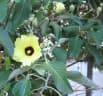
Malvaceae FAMILY
Talipariti hastatum
Talipariti hastatum
Edibility
1/5
Medicinal
2/5
Safety & Hazards
None known
Cultivation Details
HabitEvergreen Tree
Growth—
The plant flowers and produces fruit all year round[1].
Propagation
Seed - sow in situ or in containers. Germination is usually quite rapid. Prick out container-grown seedlings into individual pots when they are large enough to handle and plant them out into their permanent positions when they are 10cm or more tall. Cuttings of half-ripe wood in a frame. Large limbs can be planted as living posts and usually root easily[2]. Cite as: Tropical Plants Database, Ken Fern. tropical.theferns.info. 2026-02-20. <tropical.theferns.info/viewtropical.php?id=Talipariti+hastatum>
Pollinators
Insects, Birds
References
- [1]Contributions from the University of Michigan Herbarium Vol. 23 — Anderson C. (Editor) · University of Michigan Herbarium · 2001 · http://www.biodiversitylibrary.org · ISBN 0091-1860 ↩︎A series of botanical articles including a proposed new genus Talipariti, separated from Hibiscus. It can be downloaded from the Internet.
- [2]Tropical and Subtropical Trees - A Worldwide Encyclopaedic Guide. — Barwick. M. · Thames & Hudson, London · 2004 · ISBN 0-500-51181-0 ↩︎A superb book, very concise and well written, giving a wealth of information on 400 or more species including descriptions, habitat, cultivation details and plant uses. A wealth of colour photographs bring each plant vividly to life.
- [3]Flowers of India — http://www.flowersofindia.net/ ↩︎A wed site of native Indian plants, plus cultivated and naturalized species. It has good quality photos and terse details on more than 3,000 species and cultivars.
- [4]Flora Vitiensis Nova — Smith. A.C. · Pacific Tropical Botanical Garden; Hawaii · 1979 · http://www.biodiversitylibrary.org ↩︎A comprehensive flora of Fiji, often showing plant uses. It can be downloaded from the Internet.
- [5]Cornucopia II — Facciola. S. · Kampong Publications, California. · 1998 · ISBN 0-9628087-2-5 ↩︎The second edition of an excellent guide to the edible uses of plants, though it does not give any details of cultivation etc.
- [6]Tropical Ornamentals; A Guide — Whistler. W. Arthur. · Timber Press Inc. Oregon. · 2000 · ISBN 0-88192-448-2 ↩︎An excellent little guide to some of the more commonly cultivated ornamental plants of the Tropics, often giving some information on the plants other uses.
- [7]Medicinal Plants in the South Pacific — WHO Regional Publications, Manilla. · 1998 · ISBN 92-9061-118-9 ↩︎Excellent guide to 102 medicinal herbs of the Pacific Islands, with photographs of each plant and details of their constituents, biological activities and traditional uses. A description of each plant, together with habitat and distribution is given.
- [8]World Agroforesty Centre — http://www.worldagroforestry.org/ ↩︎An excellent online database of a huge range of trees giving very good information on each plant - its uses, ecology, identity, propagation, pests etc.
- [9]Economic Botany. — Hill. A. F. · The Maple Press · 1952 · ISBN - ↩︎Not very comprehensive, but it is quite readable and goes into some detail about the plants it does cover.
- [10]Agroforestry in the Pacific Islands: Systems for Sustainability — W.C. Clarke and R.R. Thaman (Editors) · United Nations University Press, Tokyo · 1993 · http://www.unu.edu/unupress/unupbooks/80824e/80824E00.htm#Contents · ISBN 92-808-0824-9 ↩︎The guide includes information on 100 species of plants for Agroforestry. It is also available on the web at the address given above.
- [PFAF]Plants for a Future — pfaf.org ↩︎