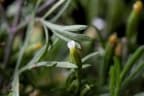
Tagetes filifolia
Tagetes filifolia
Safety & Hazards
None known
Cultivation Details
Tagetes filifolia is native to the seasonally dry tropics, though it can be grown as a tender annual in the temperate zone. Requires a well-drained moderately fertile soil in a sunny position[1]. Grows well in heavy clay soils and in sandy soils[2]. Grows well with tomatoes. Removing dead flowers before the seed is formed will extend the flowering season[2]. Plants are prone to slugs, snails and botrytis[2].
Propagation
Seed - sow early spring in a greenhouse. Only just cover the seed. Germination usually takes place within 2 weeks. When they are large enough to handle, prick the seedlings out into individual pots and plant them out after the last expected frosts. Cite as: Temperate Plants Database, Ken Fern. temperate.theferns.info. 2026-02-21. <temperate.theferns.info/plant/Tagetes+filifolia>
Pollinators
Insects
References
- [1]The New RHS Dictionary of Gardening. 1992. — Huxley. A. · MacMillan Press · 1992 · ISBN 0-333-47494-5 ↩︎Excellent and very comprehensive, though it contains a number of silly mistakes. Readable yet also very detailed.
- [2]The RHS Gardener's Encyclopedia of Plants and Flowers — Brickell. C. · Dorling Kindersley Publishers Ltd. · 1990 · ISBN 0-86318-386-7 ↩︎Excellent range of photographs, some cultivation details but very little information on plant uses.
- [3]Flora of Guatemala — Standley P.C. & J. A. Steyermark · 1946 - 1976 · http://www.archive.org/ ↩︎A superb reference, though somewhat dated. Gives lots of plant uses as well as information on plant habit and habitat. The entire flora (13 volumes) can now be downloaded from http://www.archive.org/
- [4]Cornucopia - A Source Book of Edible Plants. — Facciola. S. · Kampong Publications · 1990 · ISBN 0-9628087-0-9 ↩︎Excellent. Contains a very wide range of conventional and unconventional food plants (including tropical) and where they can be obtained (mainly N. American nurseries but also research institutes and a lot of other nurseries from around the world.
- [5]Cornucopia II — Facciola. S. · Kampong Publications, California. · 1998 · ISBN 0-9628087-2-5 ↩︎The second edition of an excellent guide to the edible uses of plants, though it does not give any details of cultivation etc.
- [6]Dictionary of Economic Plants. — Uphof. J. C. Th. · Weinheim · 1959 · ISBN - ↩︎An excellent and very comprehensive guide but it only gives very short descriptions of the uses without any details of how to utilize the plants. Not for the casual reader.