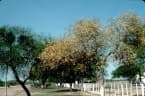
Tabebuia nodosa
Tabebuia nodosa
Safety & Hazards
None known
Cultivation Details
Mainly found in the subtropics, the tree enters the tropics in Brazil and Bolivia, where it is usually found at elevations below 600 metres, but can ascend to just over 1,000 metres. Grows best in a sunny position[1]. The tree has a moderate rate of growth, reaching a height of around 2 metres within two years from seed[1]. The tree resprouts freely from the base after being felled[1]. There is a belief in Brazil that when the tree flowers then it will rain[1].
Propagation
Seed - it has a short viability and so is best sown as soon as it is ripe in a sunny position in a nursery seedbed. A germination rate in excess of 80% can usually be expected, with the seed sprouting within a few days[1]. When the seedlings are 4 - 6cm tall, pot them up into individual containers and they should be ready to plant out 4 - 5 months later[]. Cite as: Tropical Plants Database, Ken Fern. tropical.theferns.info. 2026-02-20. <tropical.theferns.info/viewtropical.php?id=Tabebuia+nodosa>
Pollinators
Bees
References
- [1]Brazilian Trees. Volume 2. 4th Edition. — Lorenzi. H. · Instituto Plantarum De Estudos Da Flora; Brazil. · 2002 · ISBN 85-86714-15-1 ↩︎Information on 350 species of Brazilian trees. Stunning photographs of each species, brief details on the plant, its uses and how to grow it from seed. A superb work, with the minor irritation that the translation from Portuguese is not of the best.
- [2]IUCN Red List of Threatened Species — http://www.iucnredlist.org/ ↩︎A list of plants under threat and facing possible extinction, usually with brief details of the threats and information on habitat.
- [3]Bignoniaceae: Part II (Tribe Tecomeae) — Gentry A.H. · The New York Botanical Garden, New York · 1992 · ISBN 0-89327-368-6 ↩︎
- [PFAF]Plants for a Future — pfaf.org ↩︎