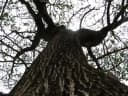
Tabebuia heterophylla
Tabebuia heterophylla
Safety & Hazards
None known
Cultivation Details
A plant of the dry to moist tropics growing in areas where the mean annual rainfall can range from 850 - 1,500mm[1]. Temperature ranges from a mean minimum in January of 16°c to a mean maximum of 31°c in August - the trees do not experience frost[1]. Prefers a position in full sun[2]. An easily grown plant growing on a range of soils, it prefers a well-drained, fertile soil but can succeed even in poor, calcareous soils[2, 1]. Established plants are very drought tolerant[2]. The tree has shown a tendency to become invasive in some regions[2]. It has become a problem in Pacific regions where it grows on any soil type and will adapt to poor or degraded soils. It produces lots of seeds, which can grow away to form pure monotypic stands. It is an extremely fast growing species and can easily outcompete native and other exotic trees. It bears leaves and branches almost to the base and casts a deep shade under which virtually no other species can grow. Its thick litter layer may also prevent the growth of native seedlings[3]. Trees will transplant well, even when quite large[2]. The tree flowers intermittently throughout the year and will often celebrate an unexpected shower by erupting into masses of bloom[2]. This species can hybridize quite freely with other members of the genus[2].
Propagation
Seed - it has a short viability and needs to be sown as soon as possible once it is ripe[2]. Seeds sown directly in seedbeds after collection in the field showed germination rates of 90% within 2 weeks[1]. A 3 week delay in sowing seeds reduced viability to about 55%; and after 5 weeks no seeds germinated[1]. Seeds stored at 25% seed moisture content, at a temperature of 4°c, gave a germination rate of 55% after 25 months storage[1]. The more common means of propagating this plant is to dig up seedlings from the wild and transplant them straight into their permanent positions[1]. Cite as: Tropical Plants Database, Ken Fern. tropical.theferns.info. 2026-02-20. <tropical.theferns.info/viewtropical.php?id=Tabebuia+heterophylla>
Pollinators
Bees
References
- [1]Silvics of North America. Agricultural Handbook No. 654. — Burns. R.M. & Honkala. B.H. · USDA Forest Service; Washington DC. · 1990 · http://www.na.fs.fed.us/spfo/pubs/silvics_manual/table_of_contents.htm ↩︎A very comprehensice guide to about 200 species of timber trees of N. America, Hawaii and Puerto Rico. Mainly temperate species, plus a number of tropical species. It is downloadable from the Internet.
- [2]Tropical and Subtropical Trees - A Worldwide Encyclopaedic Guide. — Barwick. M. · Thames & Hudson, London · 2004 · ISBN 0-500-51181-0 ↩︎A superb book, very concise and well written, giving a wealth of information on 400 or more species including descriptions, habitat, cultivation details and plant uses. A wealth of colour photographs bring each plant vividly to life.
- [3]Global Invasive Species Database — http://www.issg.org/database/welcome/ ↩︎Very detailed information on almost 400 species (with more being added) of plants that have become weeds in areas outside their native range.
- [4]Common Trees of Puerto Rico and the Virgin Islands — Little E.L.; Wadsworth F.H. · USDA, Forest Service; Washington. · 1964 ↩︎Contains detailed information, and usually an illustration, on 250 tree species, including both native and exotic species.
- [5]IUCN Red List of Threatened Species — http://www.iucnredlist.org/ ↩︎A list of plants under threat and facing possible extinction, usually with brief details of the threats and information on habitat.
- [6]Food Plants in the Americas: A Survey of the Domesticated, Cultivated, and Wild Plants Used for Human Food in North, — Kermath B.M.; Bennett B.C.' Pulsipher L.M. · 2014 ↩︎A pre-publication draft of an amazing, on-going work first started in 1985. It contains information on more than 3,900 taxa from the Americas - from Arctic regions to the Tropics
- [7]Bignoniaceae: Part II (Tribe Tecomeae) — Gentry A.H. · The New York Botanical Garden, New York · 1992 · ISBN 0-89327-368-6 ↩︎
- [8]Puerto Rican Woods. Agriculture Handbook No. 205 — Longwood F.R. · USDA Forest Service; Washington · 1961 ↩︎Descriptions of 60 timbers from Puerto Rica.
- [9]Annals of the Missouri Botanical Garden Vol. 79 — van der Werff H. (Editor) · Missouri Botanical Garden; St. Louis. · 1992 · http://www.biodiversitylibrary.org · ISBN 0026-6493 ↩︎A botanical journal, it includes an article on the ethnobotanical uses of the plant family Bignoniaceae. It can be downloaded from the Internet.