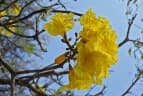
Tabebuia aurea
Tabebuia aurea
Safety & Hazards
None known
Cultivation Details
This tree is found in a wide variety of habitats - forms from the north of its range succeed in marshy or seasonally inundated soils whilst forms from the south grow in well-drained, seasonally very dry soils[1]. Growing wild in harsh conditions, it may develop 'rubbery' growth and become unstable in overly fertile soil[2]. Freshly planted young trees are slow to establish and grow away[1].
Propagation
Seed - remains viable for at least 4 months. It is best sown as soon as it is ripe in individual containers. The germination rate is usually over 50%, with seeds sprouting in 10 - 20 days[1]. Cite as: Tropical Plants Database, Ken Fern. tropical.theferns.info. 2026-02-20. <tropical.theferns.info/viewtropical.php?id=Tabebuia+aurea>
Pollinators
Data unavailable
References
- [1]Brazilian Trees. Volume 1. 4th Edition. — Lorenzi. H. · Instituto Plantarum De Estudos Da Flora; Brazil. · 2002 · ISBN 85-86714-17-8 ↩︎Information on 350 species of Brazilian trees. Stunning photographs of each species, brief details on the plant, its uses and how to grow it from seed. A superb work, with the minor irritation that the translation from Portuguese is not of the best.
- [2]Tropical and Subtropical Trees - A Worldwide Encyclopaedic Guide. — Barwick. M. · Thames & Hudson, London · 2004 · ISBN 0-500-51181-0 ↩︎A superb book, very concise and well written, giving a wealth of information on 400 or more species including descriptions, habitat, cultivation details and plant uses. A wealth of colour photographs bring each plant vividly to life.
- [3]Bignoniaceae: Part II (Tribe Tecomeae) — Gentry A.H. · The New York Botanical Garden, New York · 1992 · ISBN 0-89327-368-6 ↩︎
- [4]Medicinal Plants of Brazil — Mors W.B.; Rizzini C.T.; Pereira N.A. · Reference Publications; Michigan. · 2000 · ISBN 0-917256-42-5 ↩︎An extremely concise book, listing approximately 1,500 species and varieties of plants with their botanical name, common name in Brazil, regions in Brazil where the plant is found, a brief list of uses and any medically active compounds in the plant.