Loganiaceae FAMILY
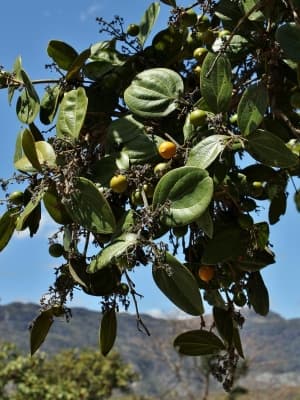
Strychnos pseudoquina
Strychnos pseudoquina
Edibility
2/5
Medicinal
3/5
Safety & Hazards
Various parts of Strychnos plants, especially the seeds and bark, contain toxic alkaloids such as strychnine and brucine. The fleshy pulp of the ripe fruits, however, is often edible[1].
Cultivation Details
HabitEvergreen Tree
GrowthSlow
Requires a sunny position[2]. Prefers a well-drained soil[2]. Established plants are drought tolerant[2]. Freshly planted young trees are usually slow to establish and grow away[2].
Propagation
Seed - best sown as soon as it is ripe in a sunny position in a nursery seedbed or in individual containers[2]. Germination rates are normally low, with the seed sprouting within 3 - 4 weeks[2]. Cite as: Tropical Plants Database, Ken Fern. tropical.theferns.info. 2026-02-20. <tropical.theferns.info/viewtropical.php?id=Strychnos+pseudoquina>
Pollinators
Data unavailable
References
- [1]Flora of Somalia — Thulin M. (Editor) · Kew Publishing, London. · 1993 ↩︎Detailed information on the plants of the region, often adding notes on the plants uses.
- [2]Brazilian Trees. Volume 2. 4th Edition. — Lorenzi. H. · Instituto Plantarum De Estudos Da Flora; Brazil. · 2002 · ISBN 85-86714-15-1 ↩︎Information on 350 species of Brazilian trees. Stunning photographs of each species, brief details on the plant, its uses and how to grow it from seed. A superb work, with the minor irritation that the translation from Portuguese is not of the best.
- [3]Flora Medica — Lindley J. · Longman, Orme, Brown, Green and Longmans: London · 1838 · http://www.biodiversitylibrary.org/ ↩︎A massive work - many of the botanical names have changed, but the book is still a wealth of information.
- [4]Sturtevant's Edible Plants of the World. — Hedrick. U. P. · Dover Publications · 1972 · ISBN 0-486-20459-6 ↩︎Lots of entries, quite a lot of information in most entries and references.
- [5]Plants used traditionally to treat malaria in Brazil. — Botsaris A.S. · Journal of Ethnobiology and Ethnomedicine · 2007 ↩︎Brief details of plants that have traditionally been used to treat malaria.
- [6]Dictionary of Economic Plants. — Uphof. J. C. Th. · Weinheim · 1959 · ISBN - ↩︎An excellent and very comprehensive guide but it only gives very short descriptions of the uses without any details of how to utilize the plants. Not for the casual reader.
- [7]Anti-hemorrhagic Activity of Four Brazilian Vegetable Species — Nishijima C.M.; Hiruma-Lima C.A. Et al · Molecules; Basel · 2009 · http://www.mdpi.com/journal/molecules · ISBN 1420-3049 ↩︎Research paper on the use of flavones in four Brazilian plant species to treat haemorrhaging as a result of snake bites. An open source document, available online.