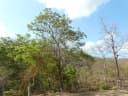
Stereospermum chelonoides
Stereospermum chelonoides
Safety & Hazards
None known
Cultivation Details
Stereospermum chelonoides is a plant of the moist subtropics and tropics, where it is found at elevations up to 1,300 metres. It grows best in areas where annual daytime temperatures are within the range 24 - 32°c, but can tolerate 5 - 47°c[1]. When dormant, the plant can survive temperatures down to about -5°c, but young growth can be severely damaged at -1°c[1]. It prefers a mean annual rainfall in the range 1,200 - 2,500mm, but tolerates 750 - 3,800mm[1]. Grows best in a sunny position, tolerating light shade[1]. Succeeds in a wide range of well-drained soils[1]. In the wild it tends to become gregarious on clayey ground, but is by no means confined to such soil and is often found in abundance on sandy and gravelly soils[2]. Prefers a pH in the range 6 - 7, tolerating 5.5 - 7.5[1]. Young plants are capable of struggling well against weeds, but their development is much impeded thereby[2]. The seedlings are drought-resistant and are fairly tolerant of short-lived frosts ; in frosty localities they are occasionally killed back, but have good power of recovery[2]. Trees can survive forest fires[1]. It is one of the commonest trees to be seen in the savannah lands of India, apparently able to shoot up yearly in spite of fire, and to grow on into a tree if only a short period of immunity from fire can be obtained[3]. The tree sometimes suckers very freely[3]. The flowers are exquisitely fragrant[4]. The tree regenerates very freely from seed in the wild[3].
Propagation
Seed - Usually germinates quite quickly, though only a small percentage of the seeds are viable. Seeds generally retain viability for less than 12 months[2]. Cuttings Air layering Suckers Cite as: Tropical Plants Database, Ken Fern. tropical.theferns.info. 2026-02-20. <tropical.theferns.info/viewtropical.php?id=Stereospermum+chelonoides>
Pollinators
Bees, Insects
References
- [1]Ecocrop — http://ecocrop.fao.org/ecocrop/srv/en/home ↩︎Basic information on a wide range of useful plants, plus details of environmental needs where available.
- [2]The Silviculture of Indian Trees — Troup. R.S. · Oxford, at the Clarendon Press · 1921 · http://www.biodiversitylibrary.org ↩︎An excellent treatment.
- [3]A Manual of Indian Timbers. — Gamble. J. S. · Bishen Singh Mahendra Pal Singh · 1972 · ISBN - ↩︎First written in the 19th century, but still a classic, giving a lot of information on the uses and habitats of Indian trees. Not for the casual reader.
- [4]Pharmacographia Indica — Dymock W.; Warden C.J.H.; Hooper D. · Education Society's Press, Byculla; Mombai. · 1890 · http://www.biodiversitylibrary.org ↩︎Information on the principal plant medicines encountered in India in the 19th century.
- [5]The New RHS Dictionary of Gardening. 1992. — Huxley. A. · MacMillan Press · 1992 · ISBN 0-333-47494-5 ↩︎Excellent and very comprehensive, though it contains a number of silly mistakes. Readable yet also very detailed.
- [6]Plants and People of Nepal — Manandhar. N. P. · Timber Press. Oregon. · 2002 · ISBN 0-88192-527-6 ↩︎Excellent book, covering over 1,500 species of useful plants from Nepal together with information on the geography and peoples of Nepal. Good descriptions of the plants with terse notes on their uses.
- [7]Trade in Indian Medicinal Plants — D.K.Ved, S.Noorunnisa Begum, & K.Ravi Kumar · Apple Academic Press; Oakville, Canada · 2018 · ISBN 978-1-77188-600-0 ↩︎
- [8]22; Bignoniacées — Santisuk T. & Vidal J.E. · Muséum National d’Histoire Naturelle · 1985 · ISBN 2-85654-175-5 ↩︎
- [9]Flora Malesiana Series 1 — Various · Nationaal Herbarium Nederiand, Universiteit Leiden branch · http://www.archive.org ↩︎A massive treatment of the plants of the Malaysian Archipelago. Much of it has been made available to download from the Internet
- [10]Indian Medicinal Plants; An Illustrated Dictionary — Khare C.P. (Ed.) · Springer-Verlag Berlin/Heidelberg · 2007 · ISBN 978-0-387-70637-5 ↩︎
- [11]Dictionary of Economic Plants. — Uphof. J. C. Th. · Weinheim · 1959 · ISBN - ↩︎An excellent and very comprehensive guide but it only gives very short descriptions of the uses without any details of how to utilize the plants. Not for the casual reader.
- [12]A Manual of the Timbers of the World — Howard A.L. · MacMillan and Co.; London. · 1934 · http://www.biodiversitylibrary.org ↩︎An excellent and comprehensive book on timbers. Rather dated, but still a main source of information for many of the less known woods. It can be downloaded from the Internet.
- [PFAF]Plants for a Future — pfaf.org ↩︎