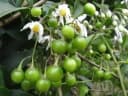
Solanum pseudoquina
Solanum pseudoquina
Safety & Hazards
Although providing many well-known foods for people, including the potato, tomato, pepper and aubergine, most species in this genus also contain toxic alkaloids. Whilst these alkaloids can make the plant useful in treaing a range of medical conditions, they can also cause problems such as nausea, vomiting, salivation, drowsiness, abdominal pain, diarrhoea, weakness and respiratory depression[1]. Unless there are specific entries with information on edible uses, it would be unwise to ingest any part of this plant[PFAF].
Cultivation Details
Requires a sunny position[2]. Prefers a moist, fertile, well-drained soil that can be on the heavy side[2]. Established plants are drought tolerant[2]. The plant self-sows freely and can invade pasture land and roadsides[2]. A fast growing plant, able to reach a height of 3 metres or more within 2 years from seed[2]. The flowers are very aromatic[2].
Propagation
Seed - best sown as soon as it is ripe in a sunny position in a nursery seedbed. A high germination rate can usually be expected, with the seed sprouting within 4 - 8 days[2]. Cite as: Tropical Plants Database, Ken Fern. tropical.theferns.info. 2026-02-20. <tropical.theferns.info/viewtropical.php?id=Solanum+pseudoquina>
Pollinators
Bees
References
- [1]Poisonous Plants of North Carolina — http://www.ces.ncsu.edu/depts/hort/consumer/poison/poison.htm ↩︎An excellent concise but comprehensive guide to toxic plants that grow in N. Carolina. It lists even those plants that are of very low toxicity, including several well-known food plants such as carrots and potatoes.
- [2]Brazilian Trees. Volume 2. 4th Edition. — Lorenzi. H. · Instituto Plantarum De Estudos Da Flora; Brazil. · 2002 · ISBN 85-86714-15-1 ↩︎Information on 350 species of Brazilian trees. Stunning photographs of each species, brief details on the plant, its uses and how to grow it from seed. A superb work, with the minor irritation that the translation from Portuguese is not of the best.
- [3]Solanaceae Source — http://solanaceaesource.org/ ↩︎Incredible detail on all the species in Solanum (now also including the Tomatoes which were formerly in Lycopersicon). The site will eventually include all other Genera within the Solanaceae.
- [4]Flora Medica — Lindley J. · Longman, Orme, Brown, Green and Longmans: London · 1838 · http://www.biodiversitylibrary.org/ ↩︎A massive work - many of the botanical names have changed, but the book is still a wealth of information.
- [5]Medicinal Plants of Brazil — Mors W.B.; Rizzini C.T.; Pereira N.A. · Reference Publications; Michigan. · 2000 · ISBN 0-917256-42-5 ↩︎An extremely concise book, listing approximately 1,500 species and varieties of plants with their botanical name, common name in Brazil, regions in Brazil where the plant is found, a brief list of uses and any medically active compounds in the plant.
- [PFAF]Plants for a Future — pfaf.org ↩︎