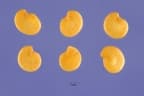
Solanum melongena
Solanum melongena
Safety & Hazards
All green parts of the plant are poisonous[1]. Although providing many well-known foods for people, including the potato, tomato, pepper and aubergine, most species in this genus also contain toxic alkaloids. Whilst these alkaloids can make the plant useful in treaing a range of medical conditions, they can also cause problems such as nausea, vomiting, salivation, drowsiness, abdominal pain, diarrhoea, weakness and respiratory depression[2]. Unless there are specific entries with information on edible uses, it would be unwise to ingest any part of this plant[PFAF].
Cultivation Details
Aubergines grow well in lowland tropical areas and at elevations up to 1,200 metres[3]. The plant is not frost-tolerant, but in warmer regions of the temperate zone it can be grown outdoors as an annual crop. A steady temperature of 25 - 30°c is required during the growing season for the best production of flowers and fruit[4]. Plants can be grown in both wet and dry seasons, though excessive rainfall slows down growth and reduces flowering[3]. Requires a sunny position. Plants grow best in a well-drained, sandy soil with plenty of organic matter, though they succeed in most soils[3]. They require plenty of moisture[5], though the soil should be well-drained. Requires a pH in the range 5.5 to 6.8[4]. Harvesting can begin about 3 - 4 months after sowing the seed and can continue for more than a year in the tropics[3]. Yields of up to 5 tonnes per hectare have been achieved[3]. In cooler climates, when grown as annuals, the plants should be restricted to no more than 4 fruits to make sure they reach a good size and ripen properly[6]. There are many named varieties[7, 4]. Plants are rarely bothered by pests or diseases[5]. Slugs, snails and caterpillars love this plant[8].
Propagation
Seed - sow early spring in a warm greenhouse with a minimum temperature of 15°c[4]. Prick out the seedlings into individual pots once they are large enough to handle and grow them on fast. If growing them outdoors, plant out after the last expected frosts. Cite as: Temperate Plants Database, Ken Fern. temperate.theferns.info. 2026-02-21. <temperate.theferns.info/plant/Solanum+melongena>
Pollinators
Insects, Self
References
- [1]Poisonous Plants. — Stary. F. · Hamlyn · 1983 · ISBN 0-600-35666-3 ↩︎Not very comprehensive, but easy reading.
- [2]Poisonous Plants of North Carolina — http://www.ces.ncsu.edu/depts/hort/consumer/poison/poison.htm ↩︎An excellent concise but comprehensive guide to toxic plants that grow in N. Carolina. It lists even those plants that are of very low toxicity, including several well-known food plants such as carrots and potatoes.
- [3]Vegetables in the Tropics — Tindall. H. D. · MacMillan, Oxford. · 1983 · ISBN 0-333-24268-8 ↩︎An excellent, in-depth look at the main vegetable crops that can be grown in the Tropics, plus many less well-known plants.
- [4]The New RHS Dictionary of Gardening. 1992. — Huxley. A. · MacMillan Press · 1992 · ISBN 0-333-47494-5 ↩︎Excellent and very comprehensive, though it contains a number of silly mistakes. Readable yet also very detailed.
- [5]Fruits of the Earth. — Bianchini. F., Corbetta. F. and Pistoia. M. ↩︎Lovely pictures, a very readable book.
- [6]Rare Vegetables for Garden and Table. — Organ. J. · Faber · 1960 · ISBN - ↩︎Unusual vegetables that can be grown outdoors in Britain. A good guide.
- [7]Cornucopia - A Source Book of Edible Plants. — Facciola. S. · Kampong Publications · 1990 · ISBN 0-9628087-0-9 ↩︎Excellent. Contains a very wide range of conventional and unconventional food plants (including tropical) and where they can be obtained (mainly N. American nurseries but also research institutes and a lot of other nurseries from around the world.
- [8]A - Z of Companion Planting. — Allardice.P. · Cassell Publishers Ltd. · 1993 · ISBN 0-304-34324-2 ↩︎A well produced and very readable book.
- [9]Protabase - Plant Resources of Tropical Africa. — http://www.prota.org ↩︎An excellent on-line database with detailed information on over 3,200 species of useful plants of Africa.
- [10]RHS Dictionary of Plants plus Supplement. 1956 — F. Chittendon. · Oxford University Press · 1951 · ISBN - ↩︎Comprehensive listing of species and how to grow them. Somewhat outdated, it has been replaced in 1992 by a new dictionary (see [ 200 ]).
- [11]Sturtevant's Edible Plants of the World. — Hedrick. U. P. · Dover Publications · 1972 · ISBN 0-486-20459-6 ↩︎Lots of entries, quite a lot of information in most entries and references.
- [12]New Vegetable Growers Handbook. — Simons. · Penguin · 1977 · ISBN 0-14-046-050-0 ↩︎A good guide to growing vegetables in temperate areas, not entirely organic.
- [13]The Vegetable Garden. — Vilmorin. A. · Ten Speed Press · ISBN 0-89815-041-8 ↩︎A reprint of a nineteenth century classic, giving details of vegetable varieties. Not really that informative though.
- [14]Encyclopaedia of Medicinal Plants. — Chiej. R. · MacDonald · 1984 · ISBN 0-356-10541-5 ↩︎Covers plants growing in Europe. Also gives other interesting information on the plants. Good photographs.
- [15]The Encyclopedia of Medicinal Plants — Chevallier. A. · Dorling Kindersley. London · 1996 · ISBN 9-780751-303148 ↩︎An excellent guide to over 500 of the more well known medicinal herbs from around the world.
- [16]Medicinal Plants of the Guianas — DeFilipps, R. A.; Maina, S. L.; & Crepin, J. · Smithsonian Museum · http://botany.si.edu/bdg/medicinal/index.html ↩︎A down-loadable PDF document of a book in pre-publication awaiting illustration. An excellent, if rather terse, guide to the traditional medicinal uses of the plants of the region
- [17]Medicinal Plants of China — Duke. J. A. and Ayensu. E. S. · Reference Publications, Inc. · 1985 · ISBN 0-917256-20-4 ↩︎Details of over 1,200 medicinal plants of China and brief details of their uses. Often includes an analysis, or at least a list of constituents. Heavy going if you are not into the subject.
- [18]Chinese Materia Medica. — Stuart. Rev. G. A. · Taipei. Southern Materials Centre · 1911 · ISBN - ↩︎A translation of an ancient Chinese herbal. Fascinating.
- [19]Glossary of Indian Medicinal Plants (Including the Supplement). — Chopra. R. N., Nayar. S. L. and Chopra. I. C. · Council of Scientific and Industrial Research, New Delhi. · 1986 · ISBN - ↩︎Very terse details of medicinal uses of plants with a wide range of references and details of research into the plants chemistry. Not for the casual reader.
- [20]Minor Products of Philippine Forests — Brown. W. H. · Bureau of Forestry, Manilla. · 1920 ↩︎A useful guide to some of the plants of the area, though terse on details. The book is out of copyright and can be legally downloaded from the Internet.
- [21]CosIng — http://ec.europa.eu/growth/tools-databases/cosing/ ↩︎CosIng is the European Commission database for information on cosmetic substances and ingredients.
- [22]Plants and People of Nepal — Manandhar. N. P. · Timber Press. Oregon. · 2002 · ISBN 0-88192-527-6 ↩︎Excellent book, covering over 1,500 species of useful plants from Nepal together with information on the geography and peoples of Nepal. Good descriptions of the plants with terse notes on their uses.
- [PFAF]Plants for a Future — pfaf.org ↩︎