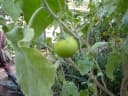
Solanum incanum
Solanum incanum
Safety & Hazards
The wild form of the plant is toxic, though cultivars have been developed that are cultivated for their edible fruits and leaves[1]. The fruits are used as an ingredient of arrow poisons and fish poisons. All Solanum species contain greater or lesser quantities of spirosolane alkaloids, including solanine and solanidine. These are bitter tasting and potentially poisonous when consumed frequently[2].
Cultivation Details
A plant of the tropics, where it is found at elevations up to 2,200 metres. It grows best in areas where annual daytime temperatures are within the range 20 - 26°c, but can tolerate 10 - 30°c[3]. It prefers a mean annual rainfall in the range 700 - 1,000mm, but tolerates 250 - 2,000mm[3]. Requires a sunny position[1]. Plants are tolerant of a wide range of soil conditions, but grow best in fertile, humus-rich conditions[1]. Tolerates moderate levels of salt in the soil[3]. Prefers a pH in the range 6.5 - 7.5, tolerating 6 - 8[3]. Plants are relatively drought tolerant once established[1]. There are reports that the plant can become a weed[3]. The first harvest is usually ready about 3 - 4 months from sowing the seed and can continue for a year[1]. Selection for larger, less toxic fruits and leaves has taken place over time and whereas the wild types produce small, bitter and toxic fruits, cultivated types are available, especially in West Africa, of which the fruits and leaves can be safely eaten in soup and as a vegetable[2]. There are two main forms of this plant grown in Africa, one has a bitter taste (probably the wild plant) whilst the other is sweet (probably due to selection over time)[2, 1, 4]. Probably a wild form of the cultivated aubergine, S. Melongena[1].
Propagation
Seed - sow in a seedbed or containers. Plant out into their permanent positions when about 6 - 8cm tall[1]. Cite as: Tropical Plants Database, Ken Fern. tropical.theferns.info. 2026-02-20. <tropical.theferns.info/viewtropical.php?id=Solanum+incanum>
Pollinators
Data unavailable
References
- [1]Vegetables in the Tropics — Tindall. H. D. · MacMillan, Oxford. · 1983 · ISBN 0-333-24268-8 ↩︎An excellent, in-depth look at the main vegetable crops that can be grown in the Tropics, plus many less well-known plants.
- [2]Protabase - Plant Resources of Tropical Africa. — http://www.prota.org ↩︎An excellent on-line database with detailed information on over 3,200 species of useful plants of Africa.
- [3]Ecocrop — http://ecocrop.fao.org/ecocrop/srv/en/home ↩︎Basic information on a wide range of useful plants, plus details of environmental needs where available.
- [4]Cornucopia II — Facciola. S. · Kampong Publications, California. · 1998 · ISBN 0-9628087-2-5 ↩︎The second edition of an excellent guide to the edible uses of plants, though it does not give any details of cultivation etc.
- [5]Flora Zambesiaca — http://apps.kew.org/efloras/fz/intro.html ↩︎An excellent online flora of plants from the Zambezi River basin. It lists a number of the plant uses as well as the habitats and botanical descriptions of the plants.
- [PFAF]Plants for a Future — pfaf.org ↩︎