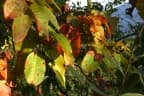
Shorea obtusa
Shorea obtusa
Safety & Hazards
None known
Cultivation Details
A plant of tropical monsoon climates, where it grows at an elevation up to 1,000 metres. It grows best in areas with a mean annual precipitation of 1,250 - 2,000mm, with a well pronounced wet season and a dry season of up to 6 months. However, it can also grow with less than 1,250mm[1]. Requires a sunny position[1]. It grows well on well-drained sandy soils, rocky soils, lateritic soils, including ferric acrisols, gleyic acrisols, and ferralic cambisols. Unlike the majority of dipterocarps, it can survive even on very poor soils and rocky areas[1]. An acid to neutral pH is suitable[1]. In Cambodia it is often found on gray soil on shale[1]. The plant is adapted to growing in areas where fires are common in the dry season[1].
Propagation
Seed. The viability of freshly collected seeds is low and after screening out those attacked by insects and clipping the wings, they are sown right away into shaded nursery beds. Survival percentage has been reported to be 65 - 75%[1]. Cite as: Tropical Plants Database, Ken Fern. tropical.theferns.info. 2026-02-20. <tropical.theferns.info/viewtropical.php?id=Shorea+obtusa>
Pollinators
Data unavailable
References
- [1]Digital Compendium of Forestry Species of Cambodia — www.digitalspecies.blogspot.com; Phnom Penh · 2008 · http://www.digitalspecies.blogspot.com ↩︎A very detailed booklet, produced in PDF format on the internet, giving information on around 100 species of trees.
- [2]IUCN Red List of Threatened Species — http://www.iucnredlist.org/ ↩︎A list of plants under threat and facing possible extinction, usually with brief details of the threats and information on habitat.
- [3]A Field Guide to Forest Trees of Northern Thailand — Gardener S.; Sidisunthorn P.; Anusarnsunthorn V. · Kobfai Publishing Project; Bangkok. · 2000 · ISBN 974-7799-01-4 ↩︎An excellent, concise guide to 430 species, plus notes on another 450 species. Excellent photographs and a separate section on distribution and plant uses.