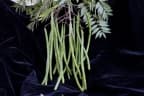
Senna spectabilis
Senna spectabilis
Safety & Hazards
None known
Cultivation Details
A plant of the tropics and subtropics, where it is found at elevations up to 2,000 metres. It grows best in areas where annual daytime temperatures are within the range 15 - 25°c, but can tolerate 10 - 30°c[1]. It prefers a mean annual rainfall in the range 800 - 1,000mm, but tolerates 600 - 1,500mm[1]. Requires a sunny position[1]. Prefers a well-drained, deep, moist, sandy or loamy soil but flourishes even in poor, black cotton soils[1]. Prefers a pH in the range 5.5 - 7, tolerating 5 - 7.5[1]. Established plants are drought tolerant[2]. There is some evidence that the tree is likely to escape from cultivation[3]. A fast-growing tree, it can easily reach a height of 3.5 metres within 2 years from seed[4]. There are conflicting reports on whether or not this tree has a symbiotic relationship with certain soil bacteria, so it is unclear as to whether this tree fixes atmospheric nitrogen[5].
Propagation
Seed - it has a hard seedcoat and may benefit from scarification before sowing to speed up germination. This can usually be done by pouring a small amount of nearly boiling water on the seeds (being careful not to cook them!) and then soaking them for 12 - 24 hours in warm water. By this time they should have imbibed moisture and swollen - if they have not, then carefully make a nick in the seedcoat (being careful not to damage the embryo) and soak for a further 12 hours before sowing. Sow the seed in a partially shaded position in a nursery seedbed. A germination rate of less than 30% can be expected from untreated seed, with the seed sprouting within 10 - 30 days[4]. When the seedlings are 4 - 6cm tall, pot them up into individual containers and they should be ready to plant out 4 - 5 months later[4]. Cite as: Tropical Plants Database, Ken Fern. tropical.theferns.info. 2026-02-20. <tropical.theferns.info/viewtropical.php?id=Senna+spectabilis>
Pollinators
Bees
References
- [1]Ecocrop — http://ecocrop.fao.org/ecocrop/srv/en/home ↩︎Basic information on a wide range of useful plants, plus details of environmental needs where available.
- [2]Desert Tropicals — http://www.desert-tropicals.com/ ↩︎The main focus of the site is succulent plants, but it also contains information on a wide range of other species. Usually at least one good photograph, plus basic information about the plant and its cultivation.
- [3]Pacific Island Ecosystems at Risk — http://www.hear.org/pier/scientificnames/index.html ↩︎A very good website detailing weed species that have been introduced into the Pacific Islands.
- [4]Brazilian Trees. Volume 1. 4th Edition. — Lorenzi. H. · Instituto Plantarum De Estudos Da Flora; Brazil. · 2002 · ISBN 85-86714-17-8 ↩︎Information on 350 species of Brazilian trees. Stunning photographs of each species, brief details on the plant, its uses and how to grow it from seed. A superb work, with the minor irritation that the translation from Portuguese is not of the best.
- [5]Nodulation Plants in GRIN Taxonomy — United States Department of Agriculture · http://www.ars-grin.gov/~sbmljw/cgi-bin/taxnodul.pl?language=en ↩︎An online database listing plants that have either positive or negative reports on root and stem nodulation with nitrogen-fixing bacteria.
- [6]World Agroforesty Centre — http://www.worldagroforestry.org/ ↩︎An excellent online database of a huge range of trees giving very good information on each plant - its uses, ecology, identity, propagation, pests etc.
- [7]IUCN Red List of Threatened Species — http://www.iucnredlist.org/ ↩︎A list of plants under threat and facing possible extinction, usually with brief details of the threats and information on habitat.
- [8]Philippine Medicinal Plants — http://www.stuartxchange.org/CompleteList.html ↩︎A lovely site, giving brief details on the medicinal uses of several hundred (over 400 at the last count) plants in the Philippines, plus a picture of each plant.