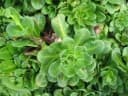
Samolus valerandi
Samolus valerandi
Safety & Hazards
None known
Cultivation Details
Samolus valerandi can be found from the cool temperate zone through the subtropics to mountainous regions in the tropics, at elevations from sea level to 3,000 metres. It grows best in areas where annual daytime temperatures are within the range 16 - 24°c, but can tolerate 12 - 32°c[1]. The plant can tolerate considerable frost[PFAF]. It prefers a mean annual rainfall in the range 500 - 1,300mm, but tolerates 300 - 1,500mm[1]. Prefers a sunny position[1]. Succeeds in ordinary garden soil in a wet position or in shallow water[2, 3], and can survive submersion for some months[4]. Dislikes shade or acid soils. Tolerant of moderate levels of salt in the soil[1]. Prefers a pH in the range 7 - 8.5, tolerating 6.5 - 9[1].
Propagation
Seed - surface sow in a cold frame in the spring, standing the pot in about 3cm of water. Prick out the seedlings when they are large enough to handle and gradually increase the depth of water as the plants grow until it is level with the tops of the pots. Plant out in the summer if there has been sufficient growth, otherwise plant out in late spring of the following year. Division in spring. Cite as: Temperate Plants Database, Ken Fern. temperate.theferns.info. 2026-02-21. <temperate.theferns.info/plant/Samolus+valerandi>
Pollinators
Self
References
- [1]Ecocrop — http://ecocrop.fao.org/ecocrop/srv/en/home ↩︎Basic information on a wide range of useful plants, plus details of environmental needs where available.
- [2]RHS Dictionary of Plants plus Supplement. 1956 — F. Chittendon. · Oxford University Press · 1951 · ISBN - ↩︎Comprehensive listing of species and how to grow them. Somewhat outdated, it has been replaced in 1992 by a new dictionary (see [ 200 ]).
- [3]The New RHS Dictionary of Gardening. 1992. — Huxley. A. · MacMillan Press · 1992 · ISBN 0-333-47494-5 ↩︎Excellent and very comprehensive, though it contains a number of silly mistakes. Readable yet also very detailed.
- [4]Protabase - Plant Resources of Tropical Africa. — http://www.prota.org ↩︎An excellent on-line database with detailed information on over 3,200 species of useful plants of Africa.
- [5]IUCN Red List of Threatened Species — http://www.iucnredlist.org/ ↩︎A list of plants under threat and facing possible extinction, usually with brief details of the threats and information on habitat.
- [6]Flora of the British Isles. — Clapham, Tutin and Warburg. · Cambridge University Press · 1962 · ISBN - ↩︎A very comprehensive flora, the standard reference book but it has no pictures.
- [7]Complete Guide to Water Plants. — Muhlberg. H. · E. P. Publishing Ltd. · 1982 · ISBN 0-7158-0789-7 ↩︎Deals with a wide range of plants for temperate areas (and indoor aquaria) with quite a lot of information on cultivation techniques.
- [8]Dictionary of Economic Plants. — Uphof. J. C. Th. · Weinheim · 1959 · ISBN - ↩︎An excellent and very comprehensive guide but it only gives very short descriptions of the uses without any details of how to utilize the plants. Not for the casual reader.
- [9]A Dictionary of Plants Used by Man. — Usher. G. · Constable · 1974 · ISBN 0094579202 ↩︎Forget the sexist title, this is one of the best books on the subject. Lists a very extensive range of useful plants from around the world with very brief details of the uses. Not for the casual reader.
- [PFAF]Plants for a Future — pfaf.org ↩︎