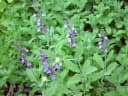
Salvia officinalis
Salvia officinalis
Safety & Hazards
The essential oil in this plant contains thujone. Thujone is a GABA receptor antagonist which allows neurons to fire more easily. In larger doses this can cause muscle spasms and convulsions, and can also be toxic to brain, kidney, and liver cells. There has been a lot of negative press regarding thujone, particularly in the mid 19th century when thujone was reported to be more dangerous than alcohol - since shown to be exaggerated; and reports in the 1970’s that it might have a similar effect on the brain to THC (found in cannabis) - since found to be incorrect. Thujone is probably best known for its use in the alcoholic drink ‘Absinthe’. It is also found in the essential oils of many other plants that are used in herbal medicines and foods, including Arborvitae (Thuja species), some Junipers (Juniperus species), Wormwoods (especially Artemisia absinthium) and Sage (Salvia officinalis). There are some legal restrictions in various countries on the quantity of thujone that can be added to foods and drinks and these vary between countries. Side effects from consuming thujone can include sleeplessness and anxiety but, unless the pure essential oil is used, the quantity of thujone found in plants is well within safety levels. Pregnant women, however, may be advised to restrict their use of thujone-containing plants.
Cultivation Details
Salvia officinalis is a plant of the temperate to subtropical zones, it can be cultivated at elevations above 500 metres in the drier regions of the tropics[1]. It grows best in areas where annual daytime temperatures are within the range 15 - 26°c, but can tolerate 5 - 30°c[1]. When dormant, the plant can survive temperatures down to about -10°c so long as the soil is not wet and this is not for more than a few days[1]. It prefers a mean annual rainfall in the range 500 - 1,000mm, but tolerates 300 - 1,500mm[1]. Requires a very well-drained light sandy soil in a sunny position[2]. Prefers a calcareous soil[3, 4]. Dislikes heavy or acid soils[5, 6]. Prefers a pH in the range 5 - 6.5, tolerating 4.2 - 8.3[1]. Succeeds in dry soils, tolerating drought once it is established[7]. Sage can be killed by excessive winter wet[2] and winter-planted bushes often die[8]. Sage is cultivated on a commercial scale for its leaves and essential oils. The expected yield where there are two cuttings a year is 2.5 - 3.0 tonnes per hectare of fresh leaves, or 5.0 - 8.0 tonnes of fresh herbs. The expected essential oil yield is 8 - 10 kilos per hectare[1]. A very ornamental plant[5], sage is commonly grown in the herb garden for culinary and medicinal purposes. There are some named varieties[9, 10]. 'Albiflora' is said to be the best culinary sage[11]. 'Purpurea' has tougher leaves than the type and makes a better tooth cleaner[PFAF]. Plants need to be trimmed in late spring in order to keep them compact[2]. They tend to degenerate after a few years and are best replaced after about 4 years[3]. The leaves emit a unique pungent aroma when pressed[12]. A good companion for many plants, including rosemary, cabbages and carrots[4, 13, 14, 15], the growing plant is said to repel insects. It is inhibited by wormwood growing nearby and dislikes growing with basil, rue or the cucumber and squash family[4, 13, 14, 15].
Propagation
Seed - sow early to mid spring in a greenhouse[5]. Germination usually takes place within 2 weeks. Prick out the seedlings into individual pots when they are large enough to handle and plant them out in early summer. In areas where the plant is towards the limits of its hardiness, it is best to grow the plants on in a greenhouse for their first winter and plant them out in late spring of the following year. Cuttings of heeled shoots, taken off the stem in May and planted out directly into the garden grow away well[9]. Cuttings of half-ripe wood, 5 - 10cm with a heel, early summer to August in a frame[16]. Easy. Cuttings of mature wood, 7 - 10cm with a heel, late autumn in a cold frame[16]. Layering in spring or autumn. Mound soil up into the plants, the branches will root into this soil and they can be removed and planted out 6 - 12 months later. Cite as: Temperate Plants Database, Ken Fern. temperate.theferns.info. 2026-02-21. <temperate.theferns.info/plant/Salvia+officinalis>
Pollinators
Bees
References
- [1]Ecocrop — http://ecocrop.fao.org/ecocrop/srv/en/home ↩︎Basic information on a wide range of useful plants, plus details of environmental needs where available.
- [2]The New RHS Dictionary of Gardening. 1992. — Huxley. A. · MacMillan Press · 1992 · ISBN 0-333-47494-5 ↩︎Excellent and very comprehensive, though it contains a number of silly mistakes. Readable yet also very detailed.
- [3]A Modern Herbal. — Grieve. · Penguin · 1984 · ISBN 0-14-046-440-9 ↩︎Not so modern (1930's?) but lots of information, mainly temperate plants.
- [4]Complete Guide to Herbs. — Holtom. J. and Hylton. W. · Rodale Press · 1979 · ISBN 0-87857-262-7 ↩︎A good herbal.
- [5]RHS Dictionary of Plants plus Supplement. 1956 — F. Chittendon. · Oxford University Press · 1951 · ISBN - ↩︎Comprehensive listing of species and how to grow them. Somewhat outdated, it has been replaced in 1992 by a new dictionary (see [ 200 ]).
- [6]New Vegetable Growers Handbook. — Simons. · Penguin · 1977 · ISBN 0-14-046-050-0 ↩︎A good guide to growing vegetables in temperate areas, not entirely organic.
- [7]The Dry Garden. — Chatto. B. · Dent · 1982 · ISBN 0460045512 ↩︎A good list of drought resistant plants with details on how to grow them.
- [8]Plants for Ground Cover — Thomas. G. S. · J. M. Dent & Sons · 1990 · ISBN 0-460-12609-1 ↩︎An excellent detailled book on the subject, very comprehensive.
- [9]Ornamental Shrubs, Climbers and Bamboos. — Thomas. G. S. · Murray · 1992 · ISBN 0-7195-5043-2 ↩︎Contains a wide range of plants with a brief description, mainly of their ornamental value but also usually of cultivation details and varieties.
- [10]Cornucopia - A Source Book of Edible Plants. — Facciola. S. · Kampong Publications · 1990 · ISBN 0-9628087-0-9 ↩︎Excellent. Contains a very wide range of conventional and unconventional food plants (including tropical) and where they can be obtained (mainly N. American nurseries but also research institutes and a lot of other nurseries from around the world.
- [11]Trees and Shrubs Hardy in Great Britain. Vol 1 - 4 and Supplement. — Bean. W. · Murray · 1981 · ISBN - ↩︎A classic with a wealth of information on the plants, but poor on pictures.
- [12]Scented Flora of the World. — Genders. R. · Robert Hale. London. · 1994 · ISBN 0-7090-5440-8 ↩︎An excellent, comprehensive book on scented plants giving a few other plant uses and brief cultivation details. There are no illustrations.
- [13]Companion Plants. — Philbrick H. and Gregg R. B. · Watkins · 1979 · ISBN - ↩︎Details of beneficial and antagonistic relationships between neighbouring plants.
- [14]Companion Planting for Successful Gardening. — Riotte. L. · Garden Way, Vermont, USA. · 1978 · ISBN 0-88266-064-0 ↩︎Fairly good.
- [15]How to Enjoy your Weeds. — Hatfield. A. W. · Frederick Muller Ltd · 1977 · ISBN 0-584-10141-4 ↩︎Interesting reading.
- [16]Propagation of Trees, Shrubs and Conifers. — Sheat. W. G. · MacMillan and Co · 1948 · ISBN - ↩︎A bit dated but a good book on propagation techniques with specific details for a wide range of plants.
- [17]Flora of the USSR. — Komarov. V. L. · Israel Program for Scientific Translation · 1968 · http://www.biodiversitylibrary.org · ISBN - ↩︎An immense (25 or more large volumes) and not yet completed translation of the Russian flora. Full of information on plant uses and habitats but heavy going for casual readers. It can be downloaded from the Internet.
- [18]IUCN Red List of Threatened Species — http://www.iucnredlist.org/ ↩︎A list of plants under threat and facing possible extinction, usually with brief details of the threats and information on habitat.
- [19]Flowers of Europe - A Field Guide. — Polunin. O. · Oxford University Press · 1969 · ISBN 0192176218 ↩︎An excellent and well illustrated pocket guide for those with very large pockets. Also gives some details on plant uses.
- [20]Sturtevant's Edible Plants of the World. — Hedrick. U. P. · Dover Publications · 1972 · ISBN 0-486-20459-6 ↩︎Lots of entries, quite a lot of information in most entries and references.
- [21]The Vegetable Garden. — Vilmorin. A. · Ten Speed Press · ISBN 0-89815-041-8 ↩︎A reprint of a nineteenth century classic, giving details of vegetable varieties. Not really that informative though.
- [22]Dictionary of Economic Plants. — Uphof. J. C. Th. · Weinheim · 1959 · ISBN - ↩︎An excellent and very comprehensive guide but it only gives very short descriptions of the uses without any details of how to utilize the plants. Not for the casual reader.
- [23]Salads all the Year Round. — Larkcom. J. · Hamlyn · 1980 ↩︎A good and comprehensive guide to temperate salad plants, with full organic details of cultivation.
- [24]Herbs — Phillips. R. & Foy. N. · Pan Books Ltd. London. · 1990 · ISBN 0-330-30725-8 ↩︎Deals with all types of herbs including medicinal, culinary, scented and dye plants. Excellent photographs with quite good information on each plant.
- [25]Hamlyn Encyclopaedia of Plants. — Triska. Dr. · Hamlyn · 1975 · ISBN 0-600-33545-3 ↩︎Very interesting reading, giving some details of plant uses and quite a lot of folk-lore.
- [26]The Herb Book. — Lust. J. · Bantam books · 1983 · ISBN 0-553-23827-2 ↩︎Lots of information tightly crammed into a fairly small book.
- [27]A Dictionary of Plants Used by Man. — Usher. G. · Constable · 1974 · ISBN 0094579202 ↩︎Forget the sexist title, this is one of the best books on the subject. Lists a very extensive range of useful plants from around the world with very brief details of the uses. Not for the casual reader.
- [28]Edible and Medicinal Plants. — Launert. E. · Hamlyn · 1981 · ISBN 0-600-37216-2 ↩︎Covers plants in Europe. a drawing of each plant, quite a bit of interesting information.
- [29]The Dictionary of Modern Herbalism. — Mills. S. Y. ↩︎An excellent small herbal.
- [30]Encyclopaedia of Herbs and their Uses. — Bown. D. · Dorling Kindersley, London. · 1995 · ISBN 0-7513-020-31 ↩︎A very well presented and informative book on herbs from around the globe. Plenty in it for both the casual reader and the serious student. Just one main quibble is the silly way of having two separate entries for each plant.
- [31]Aromatherapy - A guide for home use. — Westwood. C. · Amberwood Publishing Ltd · 1993 · ISBN 0-9517723-0-9 ↩︎An excellent little pocket guide. Very concise.
- [32]A - Z of Companion Planting. — Allardice.P. · Cassell Publishers Ltd. · 1993 · ISBN 0-304-34324-2 ↩︎A well produced and very readable book.
- [33]Plants for Man. — Schery. R. W. ↩︎Fairly readable but not very comprehensive. Deals with plants from around the world.
- [34]Encyclopaedia of Medicinal Plants. — Chiej. R. · MacDonald · 1984 · ISBN 0-356-10541-5 ↩︎Covers plants growing in Europe. Also gives other interesting information on the plants. Good photographs.
- [35]CosIng — http://ec.europa.eu/growth/tools-databases/cosing/ ↩︎CosIng is the European Commission database for information on cosmetic substances and ingredients.
- [36]Commonsense Compost Making. — Bruce. M. E. · Faber · 1977 · ISBN 0-571-09990-4 ↩︎Excellent little booklet dealing with how to make compost by using herbs to activate the heap. Gives full details of the herbs that are used.
- [PFAF]Plants for a Future — pfaf.org ↩︎