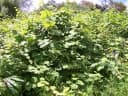
Rubus alceifolius
Rubus alceifolius
Safety & Hazards
None known
Cultivation Details
In the north of its range, Rubus alceifolius grows in the warm temperate zone of central southern China (hardiness zone 8), where winters are mild but the plant experiences frosts. It is being grown outdoors in southern England (hardiness zone 7 - 8), where it is fruiting. Grows best in a sunny position, though older plants can tolerate considerable shade[1]. Succeeds in a wide range of soils, preferring one that is well-drained[1].
Propagation
Seed - requires stratification and is best sown in early autumn in a cold frame. Stored seed requires one month stratification at about 3°c and is best sown as early as possible in the year. Prick out the seedlings when they are large enough to handle and grow on in a cold frame. Plant them out into their permanent positions in late spring of the following year. Cuttings of half-ripe wood, mid summer in a frame[2]. Tip layering in July. Plant out in autumn. Division in early spring or just before leaf-fall in the autumn[2]. Cite as: Temperate Plants Database, Ken Fern. temperate.theferns.info. 2026-02-21. <temperate.theferns.info/plant/Rubus+alceifolius>
Pollinators
Insects
References
- [1]Invasive Species Compendium — http://www.cabi.org ↩︎An immense resource - in depth information on over 900 species of invasive plants (it also has information on animals, fungi etc).
- [2]The New RHS Dictionary of Gardening. 1992. — Huxley. A. · MacMillan Press · 1992 · ISBN 0-333-47494-5 ↩︎Excellent and very comprehensive, though it contains a number of silly mistakes. Readable yet also very detailed.
- [3]Flora Malesiana Series 1 — Various · Nationaal Herbarium Nederiand, Universiteit Leiden branch · http://www.archive.org ↩︎A massive treatment of the plants of the Malaysian Archipelago. Much of it has been made available to download from the Internet
- [4]Flora of China — Missouri Botanical Garden Press; St. Louis. · 1994 · http://flora.huh.harvard.edu/china/ ↩︎An excellent, comprehensive resource in 25 volumes. In addition to the botanical information the flora also gives basic information on habitat and some uses. An on-line version is also available.