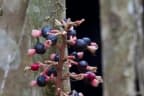
Zingiberaceae FAMILY
Renealmia aromatica
Renealmia aromatica
Edibility
2/5
Medicinal
2/5
Safety & Hazards
None known
Cultivation Details
HabitPerennial
Growth—
Not known
Propagation
Seed - Cite as: Tropical Plants Database, Ken Fern. tropical.theferns.info. 2026-02-20. <tropical.theferns.info/viewtropical.php?id=Renealmia+aromatica>
Pollinators
Data unavailable
References
- [1]Flora of Guatemala — Standley P.C. & J. A. Steyermark · 1946 - 1976 · http://www.archive.org/ ↩︎A superb reference, though somewhat dated. Gives lots of plant uses as well as information on plant habit and habitat. The entire flora (13 volumes) can now be downloaded from http://www.archive.org/
- [2]Flora of the Lancetilla Valley, Honduras. — Standley P.C. · Field Museum of Natural History; Chicago. · 1931 · http://www.biodiversitylibrary.org ↩︎Rather short on details at times, which is not surprising since so little information was available at the time. Still a useful flora. It can be downloaded from the Internet.
- [3]Medicinal Plants of Brazil — Mors W.B.; Rizzini C.T.; Pereira N.A. · Reference Publications; Michigan. · 2000 · ISBN 0-917256-42-5 ↩︎An extremely concise book, listing approximately 1,500 species and varieties of plants with their botanical name, common name in Brazil, regions in Brazil where the plant is found, a brief list of uses and any medically active compounds in the plant.
- [4]Dictionary of Economic Plants. — Uphof. J. C. Th. · Weinheim · 1959 · ISBN - ↩︎An excellent and very comprehensive guide but it only gives very short descriptions of the uses without any details of how to utilize the plants. Not for the casual reader.
- [5]Botanical Museum Leaflets Vol 29 — Harvard University; Cambridge, Massachusetts. · 1983 · http://www.biodiversitylibrary.org ↩︎Some interesting notes on plant uses in tropical America. It can be downloaded from the Internet.
- [6]The Useful Plants of West Tropical Africa. — Burkil. H. M. · Royal Botanic Gardens; Kew. · 1985 - 2004 ↩︎Brief descriptions and details of the uses of over 4,000 plants. A superb, if terse, resource, it is also available electronically on the Web - see http://www.aluka.org/