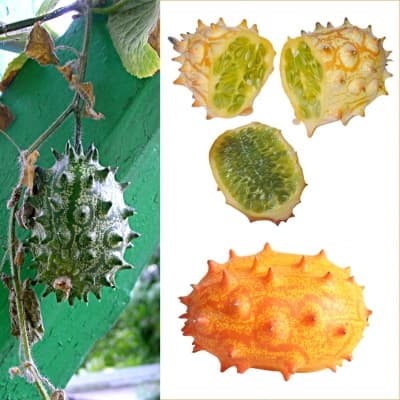
Cucumis metulifer
Cucumis metulifer
Safety & Hazards
The sprouting seed produces a toxic substance in its embryo[ 65 Title A Colour Atlas of Poisonous Plants. Publication Author Frohne. D. and Pfänder. J. Publisher Wolfe Year 1984 ISBN 0723408394 Description Brilliant. Goes into technical details but in a very readable way. The best work on the subject that I've come across so far. ]. Bitter-tasting fruits are often considered to be toxic by local people[ 299 Title Protabase - Plant Resources of Tropical Africa. Publication Author Website http://www.prota.org Publisher Year 0 ISBN Description An excellent on-line database with detailed information on over 3,200 species of useful plants of Africa. ]. A significant proportion of wild-growing horned cucumber plants encountered in southern Africa are bitter-fruited and have caused poisoning. Bitter mature fruits may remain completely intact on the plants, as neither baboons nor other wildlife eat them. The amount of bitterness varies in immature and mature fruits on the same plant, with younger fruits having a less bitter taste. Bitterness is due primarily to the presence of cucurbitacins, bitter and toxic compounds occurring in Cucurbitaceae. Cucurbitacins can cause severe illness and death, due to their potent action as purgatives and laxatives[ 299 Title Protabase - Plant Resources of Tropical Africa. Publication Author Website http://www.prota.org Publisher Year 0 ISBN Description An excellent on-line database with detailed information on over 3,200 species of useful plants of Africa. ].
Botanical Description
Cucumis metuliferus is a vigorous, annual, climbing plant producing stems up to 3 metres long. The stems scramble over the ground, climbing into the surrounding vegetation where they attach themselves by means of tendrils[ 299 Title Protabase - Plant Resources of Tropical Africa. Publication Author Website http://www.prota.org Publisher Year 0 ISBN Description An excellent on-line database with detailed information on over 3,200 species of useful plants of Africa. ]. The plant is gathered from the wild for local us as a food and medicine. Improved cultivars have been developed and the plant is sometimes cultivated commercially for its fruit in tropical and sub-tropical climates. The plant has been developed especially in New Zealand, Kenya and Israel as a commercial fruit which has become fashionable in W European markets[ 317 Title Mansfeld's Database of Agricultural and Horticultural Plants Publication Author Website http://mansfeld.ipk-gatersleben.de/pls/htmldb_pgrc/f?p=185:3:4292127278597336 Publisher Year 0 ISBN Description Terse details of a huge range of useful plants. ].