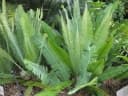
Dioon edule
Dioon edule
Safety & Hazards
We have no specific information for this species, but most if not all members of this genus are believed to contain toxins. The two main toxic compounds that have been identified are cycasin and macrozamin. When ingested in sufficient quantities, these compounds are extremely poisonous to humans and many other animals, and have been shown to cause liver damage and cancer. Cycasin and macrozamin have a cumulative effect upon the body and are suspected of causing neurological disorders when ingested in small amounts over long periods of time. There is a long history of human use of this genus as a starch-rich food, but it should be noted that the plants needed to be treated in various ways in order to remove any toxic principles. Caution should be exercised even with properly prepared foods, since even then regular consumption may lead to severe health problems and death. Since many of these species are becoming increasingly rare in the wild, this is probably a food best left to times of food shortage when other, better foods, are not available[ 1935 Title The Cycads Publication Author Whitelock L.M. Publisher Timber Press; Portland, Oregon Year 2002 ISBN 0-88192-522-5 Description An excellent book dealing with the eleven different genera and almost 300 species of plants we know as Cycads. There are detailed descriptions and a host of other information for each species. , K Title Plants for a Future Author Ken Fern Description Notes from observations, tasting etc at Plants For A Future and on field trips. ].
Botanical Description
Dioon edule is a slow-growing, evergreen, palm-like plant with an erect or decumbent, unbranched main stem that can eventually be up to 3 metres tall and 20 - 40cm in diameter; this is topped by a crown of numerous large leaves each around 90 - 150cm long[ 1935 Title The Cycads Publication Author Whitelock L.M. Publisher Timber Press; Portland, Oregon Year 2002 ISBN 0-88192-522-5 Description An excellent book dealing with the eleven different genera and almost 300 species of plants we know as Cycads. There are detailed descriptions and a host of other information for each species. ]. The edible seed is gathered from the wild and used locally. There is a long history of the use of this plant as a food in Mexico - in the past it was often used as a staple food, though now it is more likely to be used only in times of food shortage. This species has been affected by habitat destruction and over-collecting for ornamental purposes. Some populations have declined substantially, but overall decline is relatively low. The plant is classified as 'Near Threatened' in the IUCN Red List of Threatened Species(2010)[ 338 Title IUCN Red List of Threatened Species Publication Author Website http://www.iucnredlist.org/ Publisher Year 0 ISBN Description A list of plants under threat and facing possible extinction, usually with brief details of the threats and information on habitat. ].