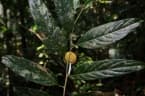
Hydnocarpus kurzii
Hydnocarpus kurzii
Safety & Hazards
The seeds contain cyanogenic glycosides and are toxic. It is advised not to eat pigs nor fish that have been feeding on the seeds, as their flesh induces nausea and vomiting[ 310 Title Plant Resources of Southeast Asia Publication Author Website http://proseanet.org/ Publisher Year 0 ISBN Description Lots of information on the uses of the plants of SE Asia. ]. In very small quantities cyanogenic glycosides have been used medicinally, having been shown to stimulate respiration and improve digestion, they are also claimed to be of benefit in the treatment of cancer. In excess, however, they can cause respiratory failure and even death.
Botanical Description
Hydnocarpus kurzii is an evergreen tree that usually grows 8 - 20 metres tall, but with some specimens reaching 30 metres[ 310 Title Plant Resources of Southeast Asia Publication Author Website http://proseanet.org/ Publisher Year 0 ISBN Description Lots of information on the uses of the plants of SE Asia. , 451 Title Flora Malesiana Series 1 Publication Author Various Website http://www.archive.org Publisher Nationaal Herbarium Nederiand, Universiteit Leiden branch Year 0 ISBN Description A massive treatment of the plants of the Malaysian Archipelago. Much of it has been made available to download from the Internet ]. The oil from the seed of this tree was the first known effective treatment for leprosy and became the source of the first synthetic drugs to treat the disease. Although now largely replaced in conventional medicine by these synthetic drugs, it is still used traditionally to treat leprosy and other skin disorders. Mainly harvested from the wild, it is also cultivated in areas such as Southeast Asia, tropical Africa and tropical South America[ 317 Title Mansfeld's Database of Agricultural and Horticultural Plants Publication Author Website http://mansfeld.ipk-gatersleben.de/pls/htmldb_pgrc/f?p=185:3:4292127278597336 Publisher Year 0 ISBN Description Terse details of a huge range of useful plants. ]. Information from India indicates the species has declined by 50% in population numbers in the last 10 years[ 338 Title IUCN Red List of Threatened Species Publication Author Website http://www.iucnredlist.org/ Publisher Year 0 ISBN Description A list of plants under threat and facing possible extinction, usually with brief details of the threats and information on habitat. ]. There is insufficient evidence regarding the status of this species and, consequently, it is presently classified as 'Data Deficient' in the IUCN Red List of Threatened Species(2010)[ 338 Title IUCN Red List of Threatened Species Publication Author Website http://www.iucnredlist.org/ Publisher Year 0 ISBN Description A list of plants under threat and facing possible extinction, usually with brief details of the threats and information on habitat. ].