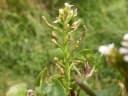
Nasturtium officinale
Nasturtium officinale
Safety & Hazards
Whilst the plant is very wholesome and nutritious, some care should be taken if harvesting it from the wild. Any plants growing in water that drains from fields where animals, particularly sheep, graze should not be used raw. This is due to the risk of it being infested with the liver fluke parasite[ 5 Title Food for Free. Publication Author Mabey. R. Publisher Collins Year 1974 ISBN 0-00-219060-5 Description Edible wild plants found in Britain. Fairly comprehensive, very few pictures and rather optimistic on the desirability of some of the plants. , 244 Title Herbs Publication Author Phillips. R. & Foy. N. Publisher Pan Books Ltd. London. Year 1990 ISBN 0-330-30725-8 Description Deals with all types of herbs including medicinal, culinary, scented and dye plants. Excellent photographs with quite good information on each plant. ]. Cooking the leaves, however, will destroy any parasites and render the plant perfectly safe to eat[ 244 Title Herbs Publication Author Phillips. R. & Foy. N. Publisher Pan Books Ltd. London. Year 1990 ISBN 0-330-30725-8 Description Deals with all types of herbs including medicinal, culinary, scented and dye plants. Excellent photographs with quite good information on each plant. ].
Botanical Description
Nasturtium officinale is a very succulent, aquatic, perennial plant with stems that can be 50cm or more long. The plant is a fairly well-known salad crop, often gathered from the wild but also grown commercially and sold in markets. It is also seen as a very healthy, vitamin and mineral rich food and, as such, has gained a reputation for its medicinal uses. Nasturtium officinale is widespread with stable populations and does not face any major threats.The plant is classified as 'Least Concern' in the IUCN Red List of Threatened Species(2019)[ 338 Title IUCN Red List of Threatened Species Publication Author Website http://www.iucnredlist.org/ Publisher Year 0 ISBN Description A list of plants under threat and facing possible extinction, usually with brief details of the threats and information on habitat. ]. Nasturtium officinale is often cultivated in many areas of the world as a food crop. It spreads quickly and even small stem sections, when separated from the parent plant, will readily produce new roots and become new plants. The plant has escaped from cultivation in many areas, it is reported to be a serious river-weed in New Zealand[ 418 Title Ecocrop Publication Author Website http://ecocrop.fao.org/ecocrop/srv/en/home Publisher Year 0 ISBN Description Basic information on a wide range of useful plants, plus details of environmental needs where available. ].