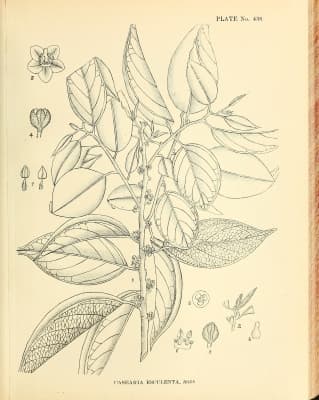
Casearia esculenta
Casearia esculenta
Safety & Hazards
The fruit is a capsute containing several seeds. Although the capsule of some species (and possibly also the seeds contained therein) is somewhat toxic, the fleshy aril surrounding the seeds is a different matter and in some species (such as this one) is often eaten and is considered to be perfectly wholesome[ 1438 Title Food Plants in the Americas: A Survey of the Domesticated, Cultivated, and Wild Plants Used for Human Food in North, Publication Author Kermath B.M.; Bennett B.C.' Pulsipher L.M. Publisher Year 2014 ISBN Description A pre-publication draft of an amazing, on-going work first started in 1985. It contains information on more than 3,900 taxa from the Americas - from Arctic regions to the Tropics , K Title Plants for a Future Author Ken Fern Description Notes from observations, tasting etc at Plants For A Future and on field trips. ].
Botanical Description
Casearia esculenta is often only a shrub when growing in the open, though it can become more tree-like when growing in forests; it can grow up to 6 metres tall[ 146 Title A Manual of Indian Timbers. Publication Author Gamble. J. S. Publisher Bishen Singh Mahendra Pal Singh Year 1972 ISBN - Description First written in the 19th century, but still a classic, giving a lot of information on the uses and habitats of Indian trees. Not for the casual reader. , 1719 Title Anti diabetic activity of stem of Casearia esculenta Roxb Publication NPAIJ, 4(2), 2008 [162-164] Author Kumar P. Publisher Year 2008 ISBN Description ]. The plant is a popular medicne in India, where the plant is harvested from the wild for local use and for sale in local markets. The plant is also occasionally used as a food.