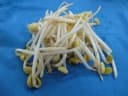
Glycine max
Glycine max
Safety & Hazards
The raw mature seed contains a range of antinutritional factors; those destroyed by heat are trypsin inhibitors, haemagglutinins, goitrogens, antivitamins, saponins and phytates; heat-stable ones are oestrogens, flatulence factors and lysinoalanine[ 299 Title Protabase - Plant Resources of Tropical Africa. Publication Author Website http://www.prota.org Publisher Year 0 ISBN Description An excellent on-line database with detailed information on over 3,200 species of useful plants of Africa. ]. These factors can be removed in several ways - pre-soaking then cooking for several hours in water; sprouting; fermentation to make products such as miso and tempeh; and roasting can all render the seeds wholesome[ 76 Title Poisonous Plants in Britain and their Effects on Animals and Man. Publication Author Cooper. M. and Johnson. A. Publisher HMSO Year 1984 ISBN 0112425291 Description Concentrates mainly on the effects of poisonous plants to livestock. , 299 Title Protabase - Plant Resources of Tropical Africa. Publication Author Website http://www.prota.org Publisher Year 0 ISBN Description An excellent on-line database with detailed information on over 3,200 species of useful plants of Africa. ].
Botanical Description
Glycine max is an erect, much-branched, annual plant that sometimes produces twining stems that climb into the surrounding vegetation. It can grow from 20 - 200cm tall. The deep taproot is branched; up to 2 metres long with lateral roots spreading horizontally to a distance of up to 2.5 metres in the upper 20cm of the soil[ 299 Title Protabase - Plant Resources of Tropical Africa. Publication Author Website http://www.prota.org Publisher Year 0 ISBN Description An excellent on-line database with detailed information on over 3,200 species of useful plants of Africa. ]. The soya bean is one of the major staple foods for humans, providing a high quality protein and an edible oil. It is one of the most widely cultivated crops in the world, with a history of cultivation going back to about the 11th century BC. In addition to its seed, the plant has several other edible uses, is commonly used in traditional medicine and its oil has many industrial uses. The plant is also grown as a green manure.