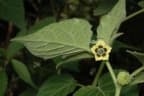
Physalis peruviana
Physalis peruviana
Safety & Hazards
The unripe fruits and foliage of Physalis species contain solanine and other solanidine alkaloids and are toxic if ingested in large quantities. The ripe fruiys are usually edible, and several species are cultivated for these fruits[ 270 Title Flora of N. America Publication Author Website http://flora.huh.harvard.edu/fna/ Publisher Year 0 ISBN Description An on-line version of the flora with an excellent description of the plant including a brief mention of plant uses. ]. All parts of the plant, except the fruit, are poisonous[ 19 Title Poisonous Plants. Publication Author Stary. F. Publisher Hamlyn Year 1983 ISBN 0-600-35666-3 Description Not very comprehensive, but easy reading. , 65 Title A Colour Atlas of Poisonous Plants. Publication Author Frohne. D. and Pfänder. J. Publisher Wolfe Year 1984 ISBN 0723408394 Description Brilliant. Goes into technical details but in a very readable way. The best work on the subject that I've come across so far. ].
Botanical Description
Physalis peruviana is an evergreen perennial plant producing a cluster of branched stems. The stems are persistent and become more or less woody, especially at the base; the plant can grow 50 - 200cm tall. In cooler climates, the stems might die back to the ground in cold weather, but can resprout from the base when warmer weather returns. The fruits are a minor, somewhat luxury, food that is for sale in many countries. The plant is often cultivated in tropical and subtropical regions for its edible fruit, which is sometimes exported[ 300 Title Vegetables in the Tropics Publication Author Tindall. H. D. Publisher MacMillan, Oxford. Year 1983 ISBN 0-333-24268-8 Description An excellent, in-depth look at the main vegetable crops that can be grown in the Tropics, plus many less well-known plants. ]. There are some named varieties[ 300 Title Vegetables in the Tropics Publication Author Tindall. H. D. Publisher MacMillan, Oxford. Year 1983 ISBN 0-333-24268-8 Description An excellent, in-depth look at the main vegetable crops that can be grown in the Tropics, plus many less well-known plants. ].