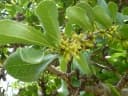
Strychnos madagascariensis
Strychnos madagascariensis
Safety & Hazards
Various parts of Strychnos plants, especially the seeds and bark, contain toxic alkaloids such as strychnine and brucine. The fleshy pulp of the ripe fruits, however, is often edible[ 500 Title Flora of Somalia Publication Author Thulin M. (Editor) Publisher Kew Publishing, London. Year 1993 ISBN Description Detailed information on the plants of the region, often adding notes on the plants uses. ].
Botanical Description
Strychnos madagascariensis is an often many-stemmed and much-branched deciduous shrub or small tree with a spreading, irregular, angular canopy; it can usually grow from 1·5 - 10 metres tall, occasionally to 20 metres[ 295 Title PlantZAfrica.com Publication Author Website http://www.plantzafrica.com Publisher Year 0 ISBN Description An excellent site giving detailed descriptions and uses of many S. African plants. , 308 Title Flora Zambesiaca Publication Author Website http://apps.kew.org/efloras/fz/intro.html Publisher Year 0 ISBN Description An excellent online flora of plants from the Zambezi River basin. It lists a number of the plant uses as well as the habitats and botanical descriptions of the plants. ]. The bole, which can be 7 - 60cm in diameter, is usually branched from low down[ 308 Title Flora Zambesiaca Publication Author Website http://apps.kew.org/efloras/fz/intro.html Publisher Year 0 ISBN Description An excellent online flora of plants from the Zambezi River basin. It lists a number of the plant uses as well as the habitats and botanical descriptions of the plants. ]. The plant is harvested from the wild for local use as a food and medicine. The fruit is sold in local markets[ 398 Title Edible Wild Plants of Tanzania Publication Author Ruffo, C.K.: Birnie, A. & Tengnas, B. Publisher Regional Land Management Unit; Nairobi. Year 2002 ISBN 9966-896-60-0 Description A very well presented, simple guide to growing and utilizing wild food plants in Tanzania, with line drawings of each plant, a description, habitat and range, non-food as well as food uses, plus basic information on growing the plants. ].