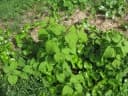
Amaranthus viridis
Amaranthus viridis
Safety & Hazards
No members of this genus are known to be poisonous, but when grown on nitrogen-rich soils they are known to concentrate nitrates in the leaves. This is especially noticeable on land where chemical fertilizers are used. Nitrates are implicated in stomach cancers, blue babies and some other health problems. It is inadvisable, therefore, to eat this plant if it is grown inorganically.
Botanical Description
Amaranthus viridis is a vigorous, erect, branched, annual plant growing 10 - 100cm tall. Occasionally the plant may become a short-lived perennial[ 299 Title Protabase - Plant Resources of Tropical Africa. Publication Author Website http://www.prota.org Publisher Year 0 ISBN Description An excellent on-line database with detailed information on over 3,200 species of useful plants of Africa. ]. The plant is often harvested from the wild as a source of food and medicines for local use. It is sometimes cultivated in the Tropics for its edible leaves. A prolific producer of seeds, the plant has often escaped from cultivation outside its native range and become a weed of disturbed and cultivated soils[ 305 Title Pacific Island Ecosystems at Risk Publication Author Website http://www.hear.org/pier/scientificnames/index.html Publisher Year 0 ISBN Description A very good website detailing weed species that have been introduced into the Pacific Islands. ].