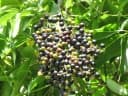
Vitex parviflora
Vitex parviflora
Safety & Hazards
None known
Botanical Description
Vitex parviflora is a medium sized deciduous tree with an open wide-spreading crown; it usually grows up to 30 metres tall, occasionally to 38 metres[ 303 Title World Agroforesty Centre Publication Author Website http://www.worldagroforestry.org/ Publisher Year 0 ISBN Description An excellent online database of a huge range of trees giving very good information on each plant - its uses, ecology, identity, propagation, pests etc. , 320 Title Trees Commonly Cultivated in SE Asia Publication Author Jensen. M. Publisher FAO Regional Office, Bangkok. Year 1999 ISBN 974-89377-5-5 Description ]. The bole is up to 125cm in diameter and sometimes buttressed[ 320 Title Trees Commonly Cultivated in SE Asia Publication Author Jensen. M. Publisher FAO Regional Office, Bangkok. Year 1999 ISBN 974-89377-5-5 Description ]. The bole can be branchless for up to 20 metres, though it is often much shorter and crooked[ 303 Title World Agroforesty Centre Publication Author Website http://www.worldagroforestry.org/ Publisher Year 0 ISBN Description An excellent online database of a huge range of trees giving very good information on each plant - its uses, ecology, identity, propagation, pests etc. ]. Vitex parviflora is the dominant timber species in monsoon forest in the Philippines, where it is harvested from the wild for its wood on a large scale[ 338 Title IUCN Red List of Threatened Species Publication Author Website http://www.iucnredlist.org/ Publisher Year 0 ISBN Description A list of plants under threat and facing possible extinction, usually with brief details of the threats and information on habitat. ]. The tree also has a range of local medicinal uses and is used as a dye. It is often grown in plantations as a timber crop, and has also been recommended asa shelterbelt tree and for use in reforestation projects. Overexploitation of the highly prized timber, together with habitat destruction, has led to the reduction of molave forests. However, given the large extent of occurrence and the number of known localities, and that it can grow in secondary vegetation, the plant is currently classified as 'Least Concern' in the IUCN Red List of Threatened Species(2020)[ 338 Title IUCN Red List of Threatened Species Publication Author Website http://www.iucnredlist.org/ Publisher Year 0 ISBN Description A list of plants under threat and facing possible extinction, usually with brief details of the threats and information on habitat. ].