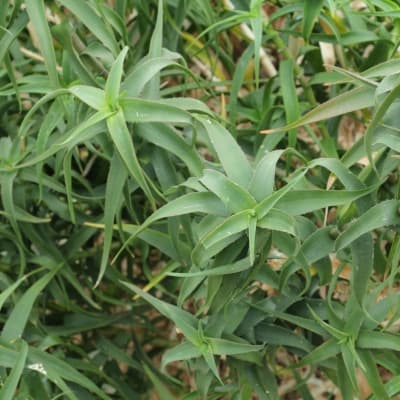
Aloe volkensii
Aloe volkensii
Safety & Hazards
The sap of Aloe species contains anthraquinones. These compounds have several beneficial medicinal actions, particularly as a laxative, and many species of Aloe are thus employed in traditional medicine. Whilst safe in small doses and for short periods of time, anthraquinones do have potential problems if used in excess. These include congestion and irritation of the pelvic organs[ 299 Title Protabase - Plant Resources of Tropical Africa. Publication Author Website http://www.prota.org Publisher Year 0 ISBN Description An excellent on-line database with detailed information on over 3,200 species of useful plants of Africa. ]. Long term use of anthraquinone laxatives may also play a role in development of colorectal cancer as they have genotoxic potential, and tumorigenic potential[ 299 Title Protabase - Plant Resources of Tropical Africa. Publication Author Website http://www.prota.org Publisher Year 0 ISBN Description An excellent on-line database with detailed information on over 3,200 species of useful plants of Africa. ].
Botanical Description
Aloe volkensii is a succulent, evergreen shrub or a tree usually growing up to 3 metres tall, exceptionally to 9 metres. The stem can be solitary or clustered, up to 30cm in diameter, simple or branching from above the base, with persistent dead leaves. Each stem is topped by a rosette of spear-shaped leaves that can be up to 100cm long and 10cm wide at their base[ 299 Title Protabase - Plant Resources of Tropical Africa. Publication Author Website http://www.prota.org Publisher Year 0 ISBN Description An excellent on-line database with detailed information on over 3,200 species of useful plants of Africa. ]. The plant is harvested from the wild for local use as a medicine, food preservative and ferment agent. It is sometimes grown as a live fence. The plant has a very wide range and is quite common, though there are some threats from land conversion for agriculture (crops and livestock) and succulent collectors. It is classified as 'Least Concern' in the IUCN Red List of Threatened Species(2013)[ 338 Title IUCN Red List of Threatened Species Publication Author Website http://www.iucnredlist.org/ Publisher Year 0 ISBN Description A list of plants under threat and facing possible extinction, usually with brief details of the threats and information on habitat. ].