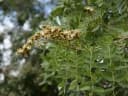
Julbernardia globiflora
Julbernardia globiflora
Safety & Hazards
The root, bark and leaf have been recorded to be toxic: drinking an infusion of the leaf causes vomiting whilst drinking an infusion of the root or bark may cause a person to lose speech, to foam at the mouth and to roll about as if in pain[ 299 Title Protabase - Plant Resources of Tropical Africa. Publication Author Website http://www.prota.org Publisher Year 0 ISBN Description An excellent on-line database with detailed information on over 3,200 species of useful plants of Africa. ]. Infusions of the bark or root have been drunk as ordeal poisons[ 299 Title Protabase - Plant Resources of Tropical Africa. Publication Author Website http://www.prota.org Publisher Year 0 ISBN Description An excellent on-line database with detailed information on over 3,200 species of useful plants of Africa. ].
Botanical Description
Julbernardia globiflora is a deciduous tree with a flat or rounded spreading crown; it can grow from 5 - 15 metres tall, exceptionally to 20 metres. The bole is often crooked, it can be branchless for up to 6 metres and up to 90cm in diameter. Sometimes the plant is shrubby, or flowering from coppice shoots, and can then be only 30 - 200cm tall[ 299 Title Protabase - Plant Resources of Tropical Africa. Publication Author Website http://www.prota.org Publisher Year 0 ISBN Description An excellent on-line database with detailed information on over 3,200 species of useful plants of Africa. , 610 Title Flora of Tropical East Africa Publication Author Beentje H.J. Website http://plants.jstor.org/search?st=396814 Publisher Royal Botanic Gardens; Kew. Year 2002 ISBN Description Available on-line, a modern flora of East Africa. ]. The plant is commonly harvested from the wild for local use, primarily as a source of fibre but also for its wood, tannin and medicinal applications. In rural areas in tropical Africa small quantities of the fibre are traded locally. Charcoal and wood from rural areas are also traded in order to supply towns. The tree is not cultivated, but wild trees are sometimes protected when the forest is cleared. The tree has ornamental value for its fragrant flowers and beautiful shape, and it also provides shade[ 299 Title Protabase - Plant Resources of Tropical Africa. Publication Author Website http://www.prota.org Publisher Year 0 ISBN Description An excellent on-line database with detailed information on over 3,200 species of useful plants of Africa. ].