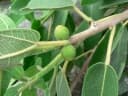
Ficus stuhlmannii
Ficus stuhlmannii
Safety & Hazards
None known
Botanical Description
Ficus stuhlmannii is a deciduous tree with a dense, well-formed crown; it can grow 10 - 15 metres tall. The plant often begins life as an epiphyte, growing in the branch of another tree; as it grows older it sends down aerial roots which, when they reach the ground quickly form roots and become much thicker and more vigorous. They supply nutrients to the fig, allowing it to grow faster than the host tree. The aerial roots gradually encircle the host tree, preventing its main trunk from expanding, whilst at the same time the foliage smothers the foliage of the host. Eventually the host dies, leaving the fig to carry on growing without competition. The edible fruit is often gathered from the wild for local use. Although not usually cultivated, the tree is often protected by local people in order to safeguard their crop of fruit[ 398 Title Edible Wild Plants of Tanzania Publication Author Ruffo, C.K.: Birnie, A. & Tengnas, B. Publisher Regional Land Management Unit; Nairobi. Year 2002 ISBN 9966-896-60-0 Description A very well presented, simple guide to growing and utilizing wild food plants in Tanzania, with line drawings of each plant, a description, habitat and range, non-food as well as food uses, plus basic information on growing the plants. ].