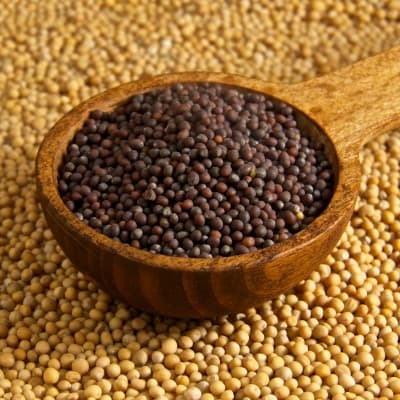
Brassica nigra
Brassica nigra
Safety & Hazards
When eaten in large quantities, the seed and pods have sometimes proved toxic to grazing animals[ 85 Title Edible Native Plants of the Rocky Mountains. Publication Author Harrington. H. D. Publisher University of New Mexico Press Year 1967 ISBN 0-8623-0343-9 Description A superb book. Very readable, it gives the results of the authors experiments with native edible plants. ].
Botanical Description
Brassica nigra is an erect, annual plant, branched above, growing from 30 - 200cm tall, exceptionally to 300cm[ 266 Title Flora of China Publication Author Website http://flora.huh.harvard.edu/china/ Publisher Missouri Botanical Garden Press; St. Louis. Year 1994 ISBN Description An excellent, comprehensive resource in 25 volumes. In addition to the botanical information the flora also gives basic information on habitat and some uses. An on-line version is also available. ]. The plant is often cultivated for its edible seed, though it is going out of favour because it rapidly sheds its seeds once they are ripe and this makes it harder to harvest mechanically than the less pungent brown mustard (Brassica juncea). The seed is used especially as a food flavouring, though it is also sown with the seeds of garden cress (Lepidium sativum) to provide mustard and cress, a salading eaten when the seedlings are about one week old. Black mustard is also grown as a medicinal plant. Black mustard is only suitable for hand-harvesting as a mustard crop, and is rapidly losing importance to Brassica juncea as a commercial crop[ 310 Title Plant Resources of Southeast Asia Publication Author Website http://proseanet.org/ Publisher Year 0 ISBN Description Lots of information on the uses of the plants of SE Asia. ]. The plant has sometimes escaped from cultivation and become naturalized as a weed.