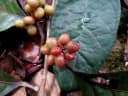
Antidesma excavatum
Antidesma excavatum
Safety & Hazards
None known
Botanical Description
Antidesma excavatum is occasionally a shrub, but more commonly a tree that can grow up to 25 metres tall. The bole can be straight or crooked, sometimes twisted; it can be free of branches for up to 11 metres and up to 50cm in diameter, sometimes with more than one stem. The plant is said to sometimes adopt a climbing habit[ 327 Title Euphorbiaceae of Malesia Publication Author Website http://www.nationaalherbarium.nl/euphorbs/ Publisher Year 0 ISBN Description An online resource that is still being developed, it gives detailed botanical descriptions of plants in the family Euphorbiaceae found growing in Malesia (the region from Peninsual Malaysia through Indonesia, the Philippines). ]. The tree is harvested from the wild for local use as a food, dye and source of wood. It seems to be cultivated as a minor fruit tree in eastern Malesia (similar to Antidesma bunius in western Malesia) which means that there may have been a certain amount of dispersal by humans[ 327 Title Euphorbiaceae of Malesia Publication Author Website http://www.nationaalherbarium.nl/euphorbs/ Publisher Year 0 ISBN Description An online resource that is still being developed, it gives detailed botanical descriptions of plants in the family Euphorbiaceae found growing in Malesia (the region from Peninsual Malaysia through Indonesia, the Philippines). ].