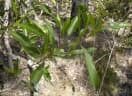
Dodonaea viscosa
Dodonaea viscosa
Safety & Hazards
The leaves are slightly cyanogenic[ 152 Title Australian Medicinal Plants. Publication Author Lassak. E. V. and McCarthy. T. Publisher New Holland Publishers Year 2001 ISBN 1876334703 Description A very good and readable guide to the subject. ]. They are also said to contain saponins[ 181 Title Meet Flora Mexicana. Publication Author Pesman. M. W. Publisher Dale S. King. Arizona. Year 1962 ISBN - Description Very readable flora but rather lacking botanically. A few notes on useful plants. ]. Although poisonous, saponins also have a range of medicinal applications and many saponin-rich plants are used in herbalism (particularly as emetics, expectorants and febrifuges) or as sources of raw materials for the pharmaceutical industry. Saponins are also found in a number of common foods, such as many beans. Saponins have a quite bitter flavour and are in general poorly absorbed by the human body, so most pass through without harm. They can be removed by carefully leaching in running water. Thorough cooking, and perhaps changing the cooking water once, will also normally remove most of them. However, it is not advisable to eat large quantities of raw foods that contain saponins. Saponins are much more toxic to many cold-blooded creatures, such as fish, and hunting tribes have traditionally put large quantities of them in streams, lakes etc in order to stupefy or kill the fish and make them easy to catch[ K Title Plants for a Future Author Ken Fern Description Notes from observations, tasting etc at Plants For A Future and on field trips. ].
Botanical Description
Dodonaea viscosa is an evergreen shrub that can grow up to 3.00 metres tall. It is harvested from the wild for local use as a food, medicine and source of materials.