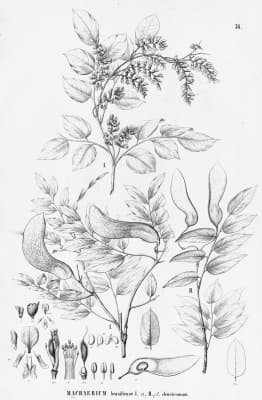
Machaerium brasiliense
Machaerium brasiliense
Safety & Hazards
None known
Botanical Description
Machaerium brasiliense is usually a semideciduous tree with an open, more or less globose crown; it can grow 8 - 14 metres tall, sometimes reaching 23 metres. The straight bole can be 40 - 70cm in diameter[ 420 Title Brazilian Trees. Volume 2. 4th Edition. Publication Author Lorenzi. H. Publisher Instituto Plantarum De Estudos Da Flora; Brazil. Year 2002 ISBN 85-86714-15-1 Description Information on 350 species of Brazilian trees. Stunning photographs of each species, brief details on the plant, its uses and how to grow it from seed. A superb work, with the minor irritation that the translation from Portuguese is not of the best. , 1528 Title Machaerium (Leguminosae, Papilionoideae, Dalbergieae) nos estados de Mato Grosso e Mato Grosso do Sul, Brasil Publication Rodríguésia 62(1): 107-122. 2011 Author Polido C.A. & Sartori A.L.B. Publisher Year 2011 ISBN Description ]. At times the plant can become more shrub-like with branches that can scramble into the surrounding vegetation. The tree is sometimes harvested from the wild for local use of its wood. It can be used as a pioneer when restoring native woodland. Whilst this species is not regarded as being specifically threatened or in decline at present, habitat loss and degradation through human activity is becoming an increasing problem throughout its range. The plant is classified as 'Least Concern' in the IUCN Red List of Threatened Species(2011)[ 338 Title IUCN Red List of Threatened Species Publication Author Website http://www.iucnredlist.org/ Publisher Year 0 ISBN Description A list of plants under threat and facing possible extinction, usually with brief details of the threats and information on habitat. ].