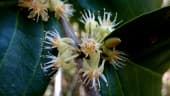
Casearia javitensis
Casearia javitensis
Safety & Hazards
The fruit is a capsute containing several seeds. Although the capsule of some species (and possibly also the seeds contained therein) is somewhat toxic, the fleshy aril surrounding the seeds is a different matter and in some species (see information below on edibility to see if this is one of them) is often eaten and is considered to be perfectly wholesome[ 1438 Title Food Plants in the Americas: A Survey of the Domesticated, Cultivated, and Wild Plants Used for Human Food in North, Publication Author Kermath B.M.; Bennett B.C.' Pulsipher L.M. Publisher Year 2014 ISBN Description A pre-publication draft of an amazing, on-going work first started in 1985. It contains information on more than 3,900 taxa from the Americas - from Arctic regions to the Tropics , K Title Plants for a Future Author Ken Fern Description Notes from observations, tasting etc at Plants For A Future and on field trips. ].
Botanical Description
Casearia javitensis is an evergreen tree with a very dense, spreading crown; it usually grows 6 - 11 metres tall, exceptionally to 17 metres. The straight, cylindrical bole can be unbranched for about one third of its height and 15 - 40cm in diameter[ 453 Title Woods of Northeastern Peru Publication Author Williams L. Website http://www.biodiversitylibrary.org/ Publisher Field Museum Press; Chicago. Year 1936 ISBN Description Gives information on the properties of the wood of well over 1,000 species of woody plants from northeastern Peru. Can be downloaded from the Internet. , 512 Title Flora of the Lancetilla Valley, Honduras. Publication Author Standley P.C. Website http://www.biodiversitylibrary.org Publisher Field Museum of Natural History; Chicago. Year 1931 ISBN Description Rather short on details at times, which is not surprising since so little information was available at the time. Still a useful flora. It can be downloaded from the Internet. , 1715 Title O Gênero Casearia Jacq. No Brasil Publication Rev. Biol. Neotrop. 13(1): 69-249. 2016 Author Marquete R. & Mansana V.F. Publisher Year 2016 ISBN Description ]. The tree is sometimes harvested from the wild for local use of its wood.