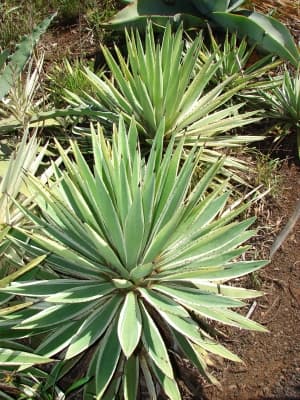
Agave vivipara
Agave vivipara
Safety & Hazards
Many Agave species have strong, sharp spines on the leaves and leaf tips. In theory at least, the flowers, nectar, immature flowering stem and the centre of the rosette of all Agave species is edible and, with proper preparation, can provide a sweet, tasty foodstuff. Some species, however, contain relatively high levels of saponins (which makes them taste bitter) and some other compounds which can cause bellyache, and so these would only be eaten in times of desperation. In addition, many people may find these foods to be strongly laxative the first few times they eat them[ 1846 Title The Agaves of Baja California Publication Occasional Papers of the California Academy of Sciences, No. 130, Author Gentry H.S. Publisher California Academy of Sciences; San Francisco Year 1978 ISBN 0068-5461 Description ].
Botanical Description
Agave vivipara is a stemless, evergreen, succulent plant forming a large, rosette of leaves up to 100cm tall and, eventually, a flowering stem that can be up to 5 metres tall. Many, if not all, of the reports on the uses of this species actually refer to Agave angustifolia. To date we have not found any reports that definitely refer to this species. Since Agave angustifolia is very similar, it is quite possible that both species have similar uses[ K Title Plants for a Future Author Ken Fern Description Notes from observations, tasting etc at Plants For A Future and on field trips. ]. Agave vivipara is being threatened by urban and tourism development and its habitat is being reduced. The plant is classified as 'Vulnerable' in the IUCN Red List of Threatened Species(2013)[ 338 Title IUCN Red List of Threatened Species Publication Author Website http://www.iucnredlist.org/ Publisher Year 0 ISBN Description A list of plants under threat and facing possible extinction, usually with brief details of the threats and information on habitat. ].