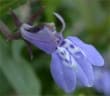
Lobelia fervens
Lobelia fervens
Safety & Hazards
Many, if not all, species in the genus Lobelia contain a range of piperidine alkaloids, particularly lobeline and lobelanine. If ingested, these can cause a range of symptoms including nausea, vomiting, diarrhoea, salivation, exhaustion and weakness, dilation of pupils, convulsions, and coma. Generally, the degree of toxicity is only moderate and plants are only harmful in larger quantities - indeed several species have medicinal uses and a few are even eaten as wild foods[ 293 Title Poisonous Plants of North Carolina Publication Author Website http://www.ces.ncsu.edu/depts/hort/consumer/poison/poison.htm Publisher Year 0 ISBN Description An excellent concise but comprehensive guide to toxic plants that grow in N. Carolina. It lists even those plants that are of very low toxicity, including several well-known food plants such as carrots and potatoes. ]
Botanical Description
Lobelia fervens is a small annual or short-lived perennial plant growing up to 50cm tall[ 398 Title Edible Wild Plants of Tanzania Publication Author Ruffo, C.K.: Birnie, A. & Tengnas, B. Publisher Regional Land Management Unit; Nairobi. Year 2002 ISBN 9966-896-60-0 Description A very well presented, simple guide to growing and utilizing wild food plants in Tanzania, with line drawings of each plant, a description, habitat and range, non-food as well as food uses, plus basic information on growing the plants. , 500 Title Flora of Somalia Publication Author Thulin M. (Editor) Publisher Kew Publishing, London. Year 1993 ISBN Description Detailed information on the plants of the region, often adding notes on the plants uses. ]. The plant is sometimes harvested from the wild for its edible leaves[ 398 Title Edible Wild Plants of Tanzania Publication Author Ruffo, C.K.: Birnie, A. & Tengnas, B. Publisher Regional Land Management Unit; Nairobi. Year 2002 ISBN 9966-896-60-0 Description A very well presented, simple guide to growing and utilizing wild food plants in Tanzania, with line drawings of each plant, a description, habitat and range, non-food as well as food uses, plus basic information on growing the plants. ].