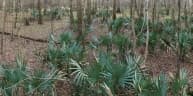
Sabal minor
Sabal minor
Safety & Hazards
None known
Botanical Description
Sabal minor is usually a small, evergreen palm with a subterranean stem; however, one can find individuals with larger features and well-developed aerial stems. In Louisiana, these individuals were recognized as separate species, but more recently they have been treated as merely ecological variants of a single widespread species[ 270 Title Flora of N. America Publication Author Website http://flora.huh.harvard.edu/fna/ Publisher Year 0 ISBN Description An on-line version of the flora with an excellent description of the plant including a brief mention of plant uses. ]. Large emergent forms of Sabal minor were even thought to be hybrids of that species with Sabal palmetto, but this claim is undocumented and unsubstantiated[ 270 Title Flora of N. America Publication Author Website http://flora.huh.harvard.edu/fna/ Publisher Year 0 ISBN Description An on-line version of the flora with an excellent description of the plant including a brief mention of plant uses. ]. The plant has a wide range of uses, providing food, medicines and a range of materials for the local people. Sabal minor has a very wide distribution, large population, is not currently experiencing any major threats and no significant future threats have been identified. The plant is classified as 'Least Concern' in the IUCN Red List of Threatened Species(2020)[ 338 Title IUCN Red List of Threatened Species Publication Author Website http://www.iucnredlist.org/ Publisher Year 0 ISBN Description A list of plants under threat and facing possible extinction, usually with brief details of the threats and information on habitat. ].