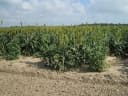
Sorghum bicolor
Sorghum bicolor
Safety & Hazards
The immature plant is poisonous, especially if slightly wilted, since it can contain the toxins hydrogen cyanide and the alkaloid hordenine[ 4 Title A Modern Herbal. Publication Author Grieve. Publisher Penguin Year 1984 ISBN 0-14-046-440-9 Description Not so modern (1930's?) but lots of information, mainly temperate plants. , 142 Title Plants Consumed by Man. Publication Author Brouk. B. Publisher Academic Press Year 1975 ISBN 0-12-136450-x Description Readable but not very comprehensive. , 269 Title Handbook of Energy Crops Publication Author Duke. J. Website https://hort.purdue.edu/newcrop/duke_energy/dukeindex.html Publisher - Year 1983 ISBN - Description Published only on the Internet, excellent information on a wide range of both temperate and tropical plants. ]. These substances are destroyed if the plant is dried or made into silage[ 269 Title Handbook of Energy Crops Publication Author Duke. J. Website https://hort.purdue.edu/newcrop/duke_energy/dukeindex.html Publisher - Year 1983 ISBN - Description Published only on the Internet, excellent information on a wide range of both temperate and tropical plants. ]. In small quantities, hydrogen cyanide has been shown to stimulate respiration and improve digestion, it is also claimed to be of benefit in the treatment of cancer. In excess, however, it can cause respiratory failure and even death.
Botanical Description
Sorghum bicolor is a vigorous, erect, annual grass with one to many tillers. A very variable plant, it can grow up to 5 metres tall. A staple food in the hot, dry tropics, sorghum is the fifth most commonly grown cereal in the world. It has a very long history of being utilised by humans, dating back to at least 1,000 BC[ 46 Title Dictionary of Economic Plants. Publication Author Uphof. J. C. Th. Publisher Weinheim Year 1959 ISBN - Description An excellent and very comprehensive guide but it only gives very short descriptions of the uses without any details of how to utilize the plants. Not for the casual reader. , 299 Title Protabase - Plant Resources of Tropical Africa. Publication Author Website http://www.prota.org Publisher Year 0 ISBN Description An excellent on-line database with detailed information on over 3,200 species of useful plants of Africa. ]. It is widely cultivated in tropical and warm temperate zones for its edible seed, as well as for its panicles (which are used as brooms) and the syrup obtained from its sap.