Capparis spinosa
Capparis spinosa
Safety & Hazards
Caper extracts and pulps have been used in cosmetics, but there have been cases reported of contact dermatitis and sensitivity from their use[ 646 Title New Crops FactSheets Publication Author Website http://www.hort.purdue.edu/newcrop/default.html Publisher Purdue University Year 0 ISBN Description A website dedicated to giving information on potential new agricultural crops. ].
Botanical Description
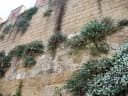
Capparis spinosa is an erect or sprawling, evergreen shrub growing from 50 - 200cm tall with branches up to 4 metres long that can range from very thorny to unarmed. It grows from a deep, extensive root system[ 646 Title New Crops FactSheets Publication Author Website http://www.hort.purdue.edu/newcrop/default.html Publisher Purdue University Year 0 ISBN Description A website dedicated to giving information on potential new agricultural crops. , 1267 Title A taxonomic revision of the Capparis spinosa group (Capparaceae) from the Mediterranean to Central Asia Publication Phytotaxa 174 (1): 001-024. 2014 Author Silvio Fici Website http://www.mapress.com/phytotaxa/ Publisher Year 2014 ISBN 1179-3155 Description ]. Some forms of the plant die down to the rootstock in the winter[ 1267 Title A taxonomic revision of the Capparis spinosa group (Capparaceae) from the Mediterranean to Central Asia Publication Phytotaxa 174 (1): 001-024. 2014 Author Silvio Fici Website http://www.mapress.com/phytotaxa/ Publisher Year 2014 ISBN 1179-3155 Description ]. The Caper plant has a very long history of human use as a food and a medicine, with evidence that it has been used since at least the Bronze Age[ 1266 Title Capparis spinosa L. in A Systematic Review: A Xerophilous Species of Multi Values and Promising Potentialities for A Publication Front. Plant Sci. 8;1845. 2017 Author Chedraoui S, Abi-Rizk A, El-Beyrouthy M, Chalak L, Ouaini N Publisher Year 2017 ISBN Description An in-depth study of Capparis spinosa with a wealth of references to the latest research. ]. It is frequently gathered from the wild for use as a food and medicine and is also often cultivated in tropical,sub-tropical and warm temperate zones[ 187 Title Perennials. Volumes 1 and 2. Publication Author Phillips. R. & Rix. M. Publisher Pan Books Year 1991 ISBN 0-330-30936-9 Description Photographs of over 3,000 species and cultivars of ornamental plants together with brief cultivation notes, details of habitat etc. , 238 Title Encyclopaedia of Herbs and their Uses. Publication Author Bown. D. Publisher Dorling Kindersley, London. Year 1995 ISBN 0-7513-020-31 Description A very well presented and informative book on herbs from around the globe. Plenty in it for both the casual reader and the serious student. Just one main quibble is the silly way of having two separate entries for each plant. ]. It is used in soil stabilization projects, as a boundary marker and is also sometimes grown as an ornamental. This record contains all the uses we have recorded for the species, but this is a very variable plant and it is currently (2017) treated as comprising 6 subspecies. Two of these subspecies have a more or less temperate range, and each of these have been given a separate record in this database. See Capparis spinosa spinosa and Capparis spinosa rupestris.