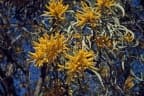
Acacia leptocarpa
Acacia leptocarpa
Safety & Hazards
Especially in times of drought, many Acacia species can concentrate high levels of the toxin Hydrogen cyanide in their foliage, making them dangerous for herbivores to eat.
Botanical Description
Acacia leptocarpa is a tree that usually grows up to 15 metres tall, though sometimes it is only a shrub, growing up to 4 metres from a single very short stem. In larger plants the boles can be unbranched for up to 4 metres and 25cm in diameter[ 286 Title Flora of Australia Publication Author Website http://www.anbg.gov.au/abrs/abif/flora/ Publisher Year 0 ISBN Description The full information from the Flora of Australia - on-line. An excellent resource. , 303 Title World Agroforesty Centre Publication Author Website http://www.worldagroforestry.org/ Publisher Year 0 ISBN Description An excellent online database of a huge range of trees giving very good information on each plant - its uses, ecology, identity, propagation, pests etc. ]. Although it produces leaves as a seedling, llike most members of the genus the mature plant does not have true leaves but has leaf-like flattened stems called phyllodes[ 397 Title Australian Native Plants Society Publication Author Website http://anpsa.org.au/index.html Publisher Year 0 ISBN Description A series of fact sheets on Australian plants. Good photographs, brief description and information on uses, habitat, range, cultivation etc. ]. The tree is harvested from the wild for local use as a source of wood. It can be used as a pioneer in restoring native woodlands and establishing woodland gardens. A well-shaped tree with beautiful flowers, casting a useful moderate shade, it could be useful in amenity areas[ 303 Title World Agroforesty Centre Publication Author Website http://www.worldagroforestry.org/ Publisher Year 0 ISBN Description An excellent online database of a huge range of trees giving very good information on each plant - its uses, ecology, identity, propagation, pests etc. ].