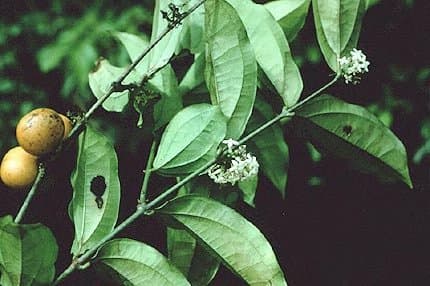
Strychnos mitscherlichii
Strychnos mitscherlichii
Safety & Hazards
Various parts of Strychnos plants, especially the seeds and bark, contain toxic alkaloids such as strychnine and brucine. The fleshy pulp of the ripe fruits, however, is often edible[ 500 Title Flora of Somalia Publication Author Thulin M. (Editor) Publisher Kew Publishing, London. Year 1993 ISBN Description Detailed information on the plants of the region, often adding notes on the plants uses. ]. The bark is a sources of 'Calabash curare', an arrow poison produced in the jungles of the Amazon. Curare has a number of applications in modern medicine[ 434 Title Flora of Peru Publication Author Macbride. J.F. Publisher Field Museum of Natural History Year 1936 ISBN Description An excellent attempt at a Flora of Peru, though it is clear that many of the plants were imperfectly known at that time and so information on them was sketchy. Available for download from the Internet. ]. The bark contains the alkaloid curarine, which paralyses the peripheral nerves so voluntary muscles for respiration cease action and asphyxiation occur[ 348 Title Medicinal Plants of the Guianas Publication Author DeFilipps, R. A.; Maina, S. L.; & Crepin, J. Website http://botany.si.edu/bdg/medicinal/index.html Publisher Smithsonian Museum Year 0 ISBN Description A down-loadable PDF document of a book in pre-publication awaiting illustration. An excellent, if rather terse, guide to the traditional medicinal uses of the plants of the region ].
Botanical Description
Strychnos mitscherlichii is a climbing shrub, supporting itself in the branches of trees by means of tendrils. Along with Strychnos toxifera, this species is the main source of 'calabash' curare, commonly used in the Amazon as an arrow poison[ 348 Title Medicinal Plants of the Guianas Publication Author DeFilipps, R. A.; Maina, S. L.; & Crepin, J. Website http://botany.si.edu/bdg/medicinal/index.html Publisher Smithsonian Museum Year 0 ISBN Description A down-loadable PDF document of a book in pre-publication awaiting illustration. An excellent, if rather terse, guide to the traditional medicinal uses of the plants of the region ]. Curare also has a number of uses in modern medicine.