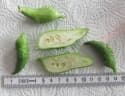
Cyclanthera pedata
Cyclanthera pedata
Safety & Hazards
None known
Botanical Description
Cyclanthera pedata is an annual plant, producing stems that can be 4.5 metres or more long, perhaps up to 12 metres. The stems scramble over the ground, clambering into surrounding vegetation and supporting themselves by means of long tendrils[ 318 Title Raintree Nutrition - Tropical Plant Database Publication Author Website http://www.rain-tree.com/plants.htm Publisher Year 0 ISBN Description Detailed information on the medicinal uses of more than two hundred rainforest plants, mainly from S. America, with basic descriptions of the plants, their other uses etc. ]. The fruit is often eaten in the tropics and the plant has a good reputation in the treatment of several disorders. The plant is widely cultivated for its fruit in the Andes of S. America and is also grown in many other areas of the tropics, especially in the Americas[ 317 Title Mansfeld's Database of Agricultural and Horticultural Plants Publication Author Website http://mansfeld.ipk-gatersleben.de/pls/htmldb_pgrc/f?p=185:3:4292127278597336 Publisher Year 0 ISBN Description Terse details of a huge range of useful plants. ]. The plant is used in some proprietary medicines and is sold on the Internet[ 299 Title Protabase - Plant Resources of Tropical Africa. Publication Author Website http://www.prota.org Publisher Year 0 ISBN Description An excellent on-line database with detailed information on over 3,200 species of useful plants of Africa. ]. The plant is considered to be a weed pest in Florida[ 318 Title Raintree Nutrition - Tropical Plant Database Publication Author Website http://www.rain-tree.com/plants.htm Publisher Year 0 ISBN Description Detailed information on the medicinal uses of more than two hundred rainforest plants, mainly from S. America, with basic descriptions of the plants, their other uses etc. ].