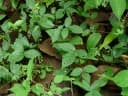
Teramnus labialis
Teramnus labialis
Safety & Hazards
None known
Botanical Description
Teramnus labialis is an extremely variable, prostrate or trailing, evergreen herbaceous plant, sometimes becoming woody at the base[ 415 Title Tropical Forages Publication Author Website http://www.tropicalforages.info/key/Forages/Media/Html/index.htm Publisher Year 0 ISBN Description Mainly focussed on forage plants, the site gives a lot of information on the plant, with a good botanical description, details of cultivation, plant uses and a good selection of photographs. , 418 Title Ecocrop Publication Author Website http://ecocrop.fao.org/ecocrop/srv/en/home Publisher Year 0 ISBN Description Basic information on a wide range of useful plants, plus details of environmental needs where available. ]. The stems can be up to 3 metres long, scrambling over the ground or twining into the surrounding vegetation for support[ 415 Title Tropical Forages Publication Author Website http://www.tropicalforages.info/key/Forages/Media/Html/index.htm Publisher Year 0 ISBN Description Mainly focussed on forage plants, the site gives a lot of information on the plant, with a good botanical description, details of cultivation, plant uses and a good selection of photographs. , 418 Title Ecocrop Publication Author Website http://ecocrop.fao.org/ecocrop/srv/en/home Publisher Year 0 ISBN Description Basic information on a wide range of useful plants, plus details of environmental needs where available. ]. Some forms are stoloniferous, spreading at the roots, whilst some can shed their leaves in dry periods[ 415 Title Tropical Forages Publication Author Website http://www.tropicalforages.info/key/Forages/Media/Html/index.htm Publisher Year 0 ISBN Description Mainly focussed on forage plants, the site gives a lot of information on the plant, with a good botanical description, details of cultivation, plant uses and a good selection of photographs. ]. The plant is sometimes gathered from the wild for local use as a medicine and source of edible seeds. It has been trialled as a pasture and agroforestry crop, but is only grown commercially in Cuba.