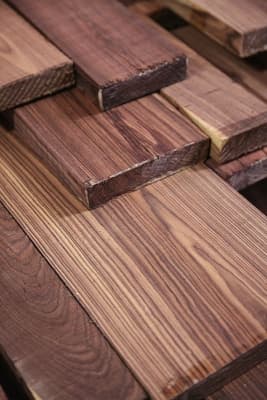
Dalbergia cearensis
Dalbergia cearensis
Safety & Hazards
None known
Botanical Description
Dalbergia cearensis is a deciduous tree with a small, sparse crown; it can grow 5 - 10 metres tall. The erect bole often branches from low down, it can be 15 - 25cm in diameter[ 625 Title Brazilian Trees. Volume 3. Publication Author Lorenzi. H. Publisher Instituto Plantarum De Estudos Da Flora; Brazil. Year 2009 ISBN 85-86714-34-4 Description Information on 350 species of Brazilian trees. Stunning photographs of each species, brief details on the plant, its uses and how to grow it from seed. A superb work, with the minor irritation that the translation from Portuguese is not of the best. ]. The wood is very ornamental highly and valued for use in cabinet making etc. It is one of 33 species named as being a suitable Hongmu timber, used for producing high quality Chinese furniture following traditions from the Ming and Quing dynasty, which makes it a particularly valuable wood[ 1791 Title The Hongmu Challenge; A briefing for the 66th meeting of the CITES Standing Committee, January 2016 Publication Author Website http://www.eia-global.org Publisher Environmental Investigation Agency; London Year 2016 ISBN Description Lists the 33 species used in making Hungmu furniture and the degree of over-exploitation plus recommendations for protecting them. ]. It is harvested from the wild and exported in quantity. The tree is highly recommended as an ornamental[ 625 Title Brazilian Trees. Volume 3. Publication Author Lorenzi. H. Publisher Instituto Plantarum De Estudos Da Flora; Brazil. Year 2009 ISBN 85-86714-34-4 Description Information on 350 species of Brazilian trees. Stunning photographs of each species, brief details on the plant, its uses and how to grow it from seed. A superb work, with the minor irritation that the translation from Portuguese is not of the best. ].