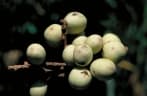
Aglaia argentea
Aglaia argentea
Safety & Hazards
None known
Botanical Description
Aglaia argentea is an evergreen tree with a dense, rounded crown; it can grow up to 30 metres tall. The straight, cylindrical bole can be unbranched for up to 18 metres and 60cm in diameter; it has buttresses that are up to 1 metre high, about 1 metre out from the tree and 4cm thick[ 388 Title Guide to the Trees of Papua New Guinea Publication Author Conn. B.J. & Damas. K.Q. Website http://www.pngplants.org/PNGtrees/ Publisher Year 0 ISBN Description An Internet site giving good descriptions of the trees of Papua New Guinea. , 451 Title Flora Malesiana Series 1 Publication Author Various Website http://www.archive.org Publisher Nationaal Herbarium Nederiand, Universiteit Leiden branch Year 0 ISBN Description A massive treatment of the plants of the Malaysian Archipelago. Much of it has been made available to download from the Internet , 930 Title A Taxonomic Monograph of the Genus Aglaia Lour. (Meliaceae) Publication Kew Bulletin Additional Series XVI Author Pannell C.M. Publisher HMSO; London Year 1992 ISBN 0-11-250067-6 Description A comprehensive treatment of the genus Aglaia, including the genus Amoora. Very good plant descriptions, it also gives some plant uses, details of habitat, range etc. ]. The tree is harvested from the wild for local use as a medicine and timber. It has potential for use as a pioneer species when restoring native woodland. The plant is classified as 'Least Concern' in the IUCN Red List of Threatened Species(2013)[ 338 Title IUCN Red List of Threatened Species Publication Author Website http://www.iucnredlist.org/ Publisher Year 0 ISBN Description A list of plants under threat and facing possible extinction, usually with brief details of the threats and information on habitat. ].