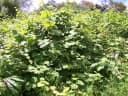
Rubus alceifolius
Rubus alceifolius
Safety & Hazards
None known
Botanical Description
Rubus alceifolius is a shrub producing each year a cluster of arching or climbing biennial stems 5 metres or more long from a woody rootstock[ 451 Title Flora Malesiana Series 1 Publication Author Various Website http://www.archive.org Publisher Nationaal Herbarium Nederiand, Universiteit Leiden branch Year 0 ISBN Description A massive treatment of the plants of the Malaysian Archipelago. Much of it has been made available to download from the Internet , 1093 Title Invasive Species Compendium Publication Author Website http://www.cabi.org Publisher Year 0 ISBN Description An immense resource - in depth information on over 900 species of invasive plants (it also has information on animals, fungi etc). ]. New roots are formed where each of the stems arch and touch the ground, these develop into a new plant and can soon produce a dense, impassable thicket of growth. The stems are usually covered with rather many stout prickles[ 451 Title Flora Malesiana Series 1 Publication Author Various Website http://www.archive.org Publisher Nationaal Herbarium Nederiand, Universiteit Leiden branch Year 0 ISBN Description A massive treatment of the plants of the Malaysian Archipelago. Much of it has been made available to download from the Internet ]. The stems only produce leaves, and do not flower, in their first year of growth, forming flowering branches in their second year and then dying after fruiting The fruits and young shoots are sometimes gathered from the wild for local use as a food. The roots are medicinal. Rubus alceifolius is a robust, aggressive perennial scrambling shrub, spreading by long arching spiny stems, rooting at their tips, as well as by bird-dispersed seeds. It can develop dense impenetrable thickets. It is native to tropical southeast Asia but has been introduced to a number of other territories, most notably the Indian Ocean island of La Réunion, where it is one of the eight most threatening plant invaders to become established on the island and occurs not only on sites disturbed by people but also in primary forest with minimal disturbance. It can behave as a liana, climbing into the canopy of forest trees and increasing the risk of wind damage. It has been classified it as highly invasive in the tropics. In a joint project between USDA and the Weed Science Society of America it was identified among the highest-ranked potential future invasive weeds in USA[ 1093 Title Invasive Species Compendium Publication Author Website http://www.cabi.org Publisher Year 0 ISBN Description An immense resource - in depth information on over 900 species of invasive plants (it also has information on animals, fungi etc). ].