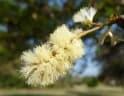
Senegalia nigrescens
Senegalia nigrescens
Safety & Hazards
Especially in times of drought, many Acacia species can concentrate high levels of the toxin Hydrogen cyanide in their foliage, making them dangerous for herbivores to eat.
Botanical Description
Senegalia nigrescens is a spiny, deciduous tree with a conical crown when young, becoming more rounded as it gets older. It usually grows up to 20 metres tall, exceptionally to 30 metres, with a bole that is usually straight and up to 75cm in diameter. The bole usually has many prickles growing on large knobs, but these are often absent in old trees, The smaller branches have pairs of hooked, blackish prickles up to 7 mm long just below the nodes[ 299 Title Protabase - Plant Resources of Tropical Africa. Publication Author Website http://www.prota.org Publisher Year 0 ISBN Description An excellent on-line database with detailed information on over 3,200 species of useful plants of Africa. ]. The tree is harvested from the wild, mainly for its timber, though it does also have minor medicinal applications. It is used locally.