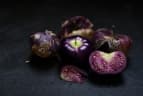
Physalis philadelphica
Physalis philadelphica
Safety & Hazards
The unripe fruits and foliage of Physalis species contain solanine and other solanidine alkaloids and are toxic if ingested in large quantities. The ripe fruiys are usually edible, and several species are cultivated for these fruits[ 270 Title Flora of N. America Publication Author Website http://flora.huh.harvard.edu/fna/ Publisher Year 0 ISBN Description An on-line version of the flora with an excellent description of the plant including a brief mention of plant uses. ]. All parts of the plant, except the fruit, are poisonous[ 19 Title Poisonous Plants. Publication Author Stary. F. Publisher Hamlyn Year 1983 ISBN 0-600-35666-3 Description Not very comprehensive, but easy reading. , 65 Title A Colour Atlas of Poisonous Plants. Publication Author Frohne. D. and Pfänder. J. Publisher Wolfe Year 1984 ISBN 0723408394 Description Brilliant. Goes into technical details but in a very readable way. The best work on the subject that I've come across so far. ].
Botanical Description
Physalis philadelphica is an erect annual plant with spreading branches; it grows from a taproot, and is usually around 15 - 100cm tall[ 270 Title Flora of N. America Publication Author Website http://flora.huh.harvard.edu/fna/ Publisher Year 0 ISBN Description An on-line version of the flora with an excellent description of the plant including a brief mention of plant uses. ]. The edible fruit is gathered from the wild for local use, whilst the plant is sometimes also cultivated on a garden scale[ 50 Title Flora Europaea Publication Author ? Publisher Cambridge University Press Year 1964 ISBN - Description An immense work in 6 volumes (including the index). The standard reference flora for Europe, it is very terse though and with very little extra information. Not for the casual reader. ]. Physalis phyladelphica is widespread in Mexico and Central America and it is possible to infer that the populations are stable. The plant is classified as 'Least Concern' in the IUCN Red List of Threatened Species(2017)[ 338 Title IUCN Red List of Threatened Species Publication Author Website http://www.iucnredlist.org/ Publisher Year 0 ISBN Description A list of plants under threat and facing possible extinction, usually with brief details of the threats and information on habitat. ]. Physalis phyladelphica is a common weed of cultivation.