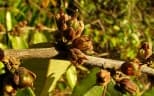
Casearia arborea
Casearia arborea
Safety & Hazards
The fruit is a capsute containing several seeds. Although the capsule of some species (and possibly also the seeds contained therein) is somewhat toxic, the fleshy aril surrounding the seeds is a different matter and in some species (see information below on edibility to see if this is one of them) is often eaten and is considered to be perfectly wholesome[ 1438 Title Food Plants in the Americas: A Survey of the Domesticated, Cultivated, and Wild Plants Used for Human Food in North, Publication Author Kermath B.M.; Bennett B.C.' Pulsipher L.M. Publisher Year 2014 ISBN Description A pre-publication draft of an amazing, on-going work first started in 1985. It contains information on more than 3,900 taxa from the Americas - from Arctic regions to the Tropics , K Title Plants for a Future Author Ken Fern Description Notes from observations, tasting etc at Plants For A Future and on field trips. ].
Botanical Description
Casearia arborea is an evergreen tree with a spreading crown; it usually grows from 2.5 - 18 metres tall, though specimens up to 27 metres have been recorded in Peru. The straight, cylindrical bole is usually up to 40cm in diameter, free of branches for about one third of its height[ 447 Title Common Trees of Puerto Rico and the Virgin Islands Publication Author Little E.L.; Wadsworth F.H. Publisher USDA, Forest Service; Washington. Year 1964 ISBN Description Contains detailed information, and usually an illustration, on 250 tree species, including both native and exotic species. ]. The tree is sometimes harvested from the wild for local use as a medicine and source of wood.