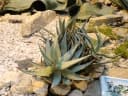
Aloe asperifolia
Aloe asperifolia
Safety & Hazards
The sap of Aloe species contains anthraquinones. These compounds have several beneficial medicinal actions, particularly as a laxative, and many species of Aloe are thus employed in traditional medicine. Whilst safe in small doses and for short periods of time, anthraquinones do have potential problems if used in excess. These include congestion and irritation of the pelvic organs[ 299 Title Protabase - Plant Resources of Tropical Africa. Publication Author Website http://www.prota.org Publisher Year 0 ISBN Description An excellent on-line database with detailed information on over 3,200 species of useful plants of Africa. ]. Long term use of anthraquinone laxatives may also play a role in development of colorectal cancer as they have genotoxic potential, and tumorigenic potential[ 299 Title Protabase - Plant Resources of Tropical Africa. Publication Author Website http://www.prota.org Publisher Year 0 ISBN Description An excellent on-line database with detailed information on over 3,200 species of useful plants of Africa. ].
Botanical Description
Aloe asperifolia is an evergreen, succulent perennial plant growing 15 - 30cm tall. It forms stemless rosettes of leaves in a cluster of 20 - 40 rosettes[ 663 Title Flora of Southern Africa Publication Author Roux J.P. Website http://plants.jstor.org/search?st=662545 Publisher Year 2003 ISBN Description An excellent on-line resource. ]. The plant is harvested from the wild for local medicinal use.